
Why You Feel So Isolated as a Highly Sensitive Entrepreneur
I used to lead workshops for leadership teams and look entirely at ease. The work went well. People valued it. What they could not see was how much I was…
Why successful people feel empty often stems from chasing external success without nurturing inner fulfillment. You can build a beautiful life and still wake up with a sense of emptiness inside.
If you’re feeling empty despite success, the issue usually isn’t a lack of discipline or gratitude. It’s that the identity that helped you win has become too tight for the person you’ve become—leaving you with a life that looks right from the outside but feels misaligned on the inside.
Recognizing that gap is the first step to reclaiming your path.
If you’ve been wondering why successful people feel empty, these are the core shifts that matter:
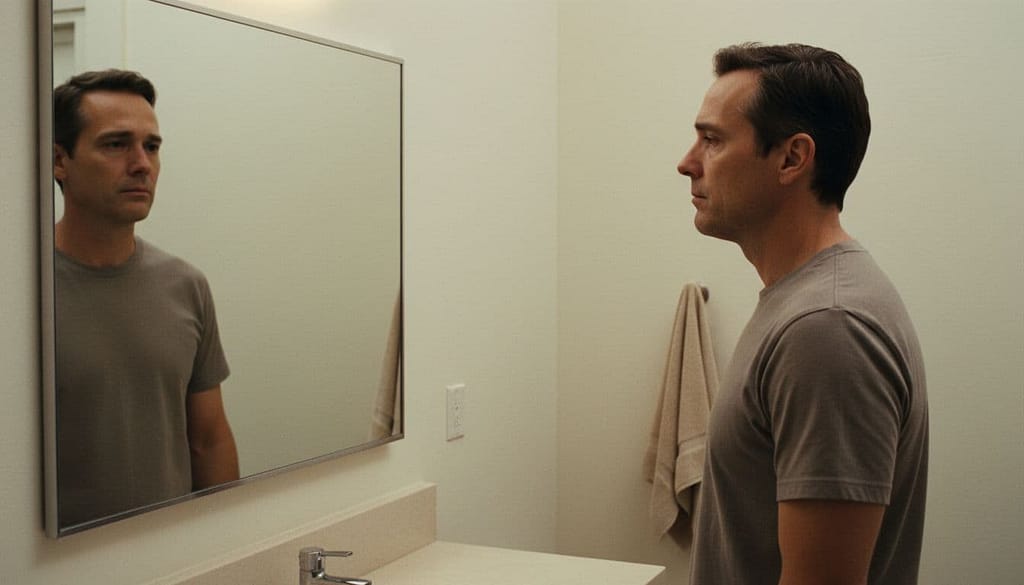
I remember standing in front of the mirror, looking into my own eyes, and feeling deep sadness, emptiness, and drain. It wasn’t a dramatic moment. It was worse than that. It was clear.
I could see that the person looking back at me wasn’t who I was anymore.
That hurt, because for years I had tried to become the best version of myself. I tried to do things right. I built a life of hollow success that, from the outside, looked good. I lived in a beautiful place. I had success. I had good relationships. I even had a sweet dog. Nothing looked broken.
And still, something inside me felt missing.
“What was missing was myself.”
That is one of the hardest things a high-achiever can admit. Not because you lack results. Not because your life is falling apart. But because there is no obvious external problem to blame. You have the external markers. You have the proof. You may even have admiration from other people. Yet when things get quiet, you feel the sense of emptiness.
This is why successful people feel empty inside. The emptiness doesn’t always come from failure. Sometimes it comes from living too long through a version of yourself that once worked, but no longer carries your truth.
If you’re in that place, you’re not weak, ungrateful, or broken. You’re probably outgrowing who you became.
I’ve worked for more than 15 years as a licensed therapist and integral coach, and I’ve seen this pattern again and again with high achievers like founders, executives, creators, and accomplished people who know how to perform at a high level.
The pattern is simple. It starts in a healthy and ambitious place.
You have passion. You have vision. You want to build something meaningful. You solve problems. You create. You stretch. Then life starts rewarding the version of you that performs well under pressure, gets results, and keeps moving.
That version becomes your identity.
At first, your habits are helpful. They make your work possible. They allow you to focus. They let you carry more responsibility.
Then the stakes rise.
There is more demand. More pressure. More people depending on you. Maybe a team. Maybe a family. Maybe a business that no longer lets you think fresh thoughts all day long. So you build routines. Patterns. Automatic responses. You live on autopilot because it keeps the machine running.
Here is what that often looks like:
| What begins with life | What it turns into over time |
|---|---|
| Passion and creativity | Duty and repetition |
| Focused habits | Rigid patterns |
| Clear ambition | Constant management |
| Healthy effort | Identity maintenance |
The problem isn’t that structure is bad. The problem is that the structure that once supported your growth can later restrict it.
Many high achievers don’t lose themselves all at once. They lose themselves through repetition. Through over-functioning. Through staying loyal to a role that used to fit.
At a certain point, the identity that made you successful becomes too small for who you truly are.
That is the real issue.
You feel that gap as tension, numbness, sadness, irritation, or a vague sense that something is off. You can’t always explain it, but some deeper part of you knows. There is a voice underneath the noise saying, “This isn’t it.”
And this is where many intelligent people make the wrong move. They try to solve the problem the same way they solved everything else. More strategy. More work. Another project. More entertainment. A better calendar. A sharper plan.
None of that touches the core.
The identity that created your success can become too tight for the life trying to emerge through you.
You don’t get out of this by doing more. You get out by becoming more. More honest. More connected. More aligned with your essential nature.
This is not about rejecting success. It is not a call to disappear into “monk mode” or walk away from your work. For many people, business and leadership are not separate from inner growth. They are the place where it gets exposed.

The next level is not more ego-effort. It’s an identity shift that gives your deeper self room to lead.
One reason this experience gets misunderstood is that the first signs often look like burnout, low mood, or depression.
Sometimes that language fits, especially in a clinical sense. But often, what gets labeled as burnout is something more specific, especially when it impacts mental well-being. High achievers are no longer inspired by the version of themselves they have been living.
That feels flat. Heavy. Gray.
You still know how to function. You can still produce. You can still show up. But the spark is gone, and the life you’re maintaining no longer gives you energy back.
This is why you feel empty and numb. Not always because you have no energy, but because you are not expressing the energy you truly are.
The difference matters.
When you think the issue is only exhaustion, you rest and then return to the same structure. When you see that the issue is disconnection, the question changes. You stop asking, “How do I push through this?” and start asking, “Where have I stopped being real in my own life?”
A lot becomes clearer when you look at it this way:
This is also why flat self-improvement often stops working here. Better habits can help. So can therapy. But if the deeper issue is that your life is built around an outdated self, no amount of surface optimization will give you lasting fulfillment.
You don’t need a prettier performance. You need more contact with who you are beneath it.
This is where I use the term Reality Design.
Reality Design is the intentional creation of experiences, environments, and ways of being that cultivate emotional mastery and lasting fulfillment while giving you more space to feel alive and clear. It is not vague manifestation. It is not magical thinking. It is not pretending your way into a better mood.
It is grounded inner work aligned with your core values that changes the structure of your life from the inside out.
For accomplished people, this matters because doing more of what already works can keep you externally successful while internally divided. Reality Design interrupts that pattern. It asks a more precise question: what conditions help you reconnect with your true self, instead of continuing to perform a self that has gone stale?
Start there.
Ask yourself:
What in my life still gives me a sense of aliveness?
Not pleasure alone. Not distraction. Aliveness.
When do you feel spacious? When do you feel true? What are the moments where you don’t have to force yourself into a role, because something real in you is already present?
At first, the answers may be subtle. A walk. Silence. Time in nature. Creative work without pressure. A conversation where you don’t have to manage your image. The point is not to judge the answer. The point is to notice it.
That awareness is the beginning of change.
To support that process, I created the Brilliant State Meditation, a guided 10-minute practice that helps you reset your focus and come back into alignment each day.
It has been downloaded more than 160,000 times on Insight Timer because it is simple, direct, and easy to use when life feels noisy. The value is not that it gives you another self-help ritual. The value is that it helps you see more clearly where you are, and what you truly need.
You can get the free Brilliant State Meditation and breakthrough mind tools here.
When people feel empty after success, they often look outward for relief during a midlife crisis.
A new relationship. More attention. More chemistry. More stimulation. More spending. More social energy. More external validation.
This is the classic move in a midlife unraveling. You feel lost, so you try to feel more alive through someone else. You start projecting hope onto a partner, a friendship, an affair, or even a new business connection. For a moment, it can feel exciting.
But it doesn’t solve the emptiness.
Because the gap is not between you and other people. The gap is between you and yourself.
If you don’t see that, you can damage good relationships by asking them to carry what only inner reconnection can restore. Other people can’t rescue you from self-abandonment.
This part is both the hardest and the most beautiful.
Building a real relationship with yourself means learning how to be with yourself without judgment, performance, or pressure. For many successful people, that is unfamiliar territory. They are used to achievement, image management, people-pleasing, and self-criticism.
So when the emptiness appears, another layer gets added on top of it. “What’s wrong with me?” “Why do I have all this and still feel bad?” “Why can’t I just be grateful?”
That inner tone makes the distance worse.
A healthier relationship with yourself begins with small, honest shifts:

For me, nature has often been one of the cleanest ways back. Space. Silence. No performance. No need to be “on.” Those moments help me hear myself again.
This isn’t about feeling amazing every day. It isn’t endless positivity. It is a consistent, respectful friendship with yourself. That relationship changes the quality of everything else.
If you’re ready to work on that with support, you can schedule a conversation about working with me.
If you want a simple way to hold all of this, come back to these three shifts.
This is the work beneath the symptom. Not another mindset trick. Not a polished productivity system. A return to self.
And yes, it usually takes courage. But it is often far simpler than people think once the right insight lands and your life starts reorganizing around what is real.
If difficult emotions are strong for you right now, the related video on Why Negative Emotions Are Lying to You is a good next step.
That mirror moment matters because it strips away the performance. It shows you whether the life you’re living still belongs to you.
If you have success and still feel empty, don’t rush to medicate the signal with more work, more noise, or more external change. The stronger possibility is this: you’ve outgrown who you became, leaving behind a version of yourself that no longer aligns with your true self. This is why successful people feel empty, even at the peak of their achievements.
The goal is not less ambition. It is a more honest life, one where your success supports your true self instead of working against it.
Because outer success and inner connection are not the same thing. You can have the house, the status, the relationships, and still feel disconnected from your deeper self. When that happens, the emptiness is often a sign that your life no longer reflects who you truly are.
Not always. Burnout can involve real exhaustion, stress, and nervous system overload. But for many high performers, feeling empty after success is also about boredom, repetition, and loss of self-expression. The outer symptom may look similar while the inner cause is different.
Because goals can serve as a coping mechanism to organize your effort without satisfying your inner life. Many achievers spend years building an identity around performance, then discover that achievement alone doesn’t create meaning. When the striving settles, the inner gap becomes harder to ignore.
Because fulfillment doesn’t come from metrics alone. It comes from alignment, wholeness, and contact with what feels true. If your life is built around capability but not connection, success can amplify the emptiness instead of ending it.
No relationship with others can fill a gap created by disconnection from yourself. A partner can support you, love you, and reflect you well, but they cannot become your source of identity or inner completion. If you try to make them do that, the pressure usually damages the relationship.
You start by slowing down enough to notice what is real. That may mean time alone, time in nature, honest reflection, or practices that restore inner clarity. The key is not self-improvement for its own sake, but contact with your actual needs, feelings, and inner authority.
Yes. That false choice traps a lot of thoughtful, accomplished people. You do not need to reject ambition to live with depth. The deeper move is to build success from a place that includes your wholeness, rather than sacrificing it.