
Why You Feel So Isolated as a Highly Sensitive Entrepreneur
I used to lead workshops for leadership teams and look entirely at ease. The work went well. People valued it. What they could not see was how much I was…
You can be sharp, calm, and effective all day at work, but if you want to know how to stop arguing in a relationship, the shift begins the moment you walk through your front door and feel yourself tighten up within minutes. That doesn’t always mean your relationship is the problem. Often, it means your state has dropped, and now every small thing lands harder than it should.
If you’ve been trying to figure it out by explaining more, pushing for understanding, or trying to solve it late at night when you’re already drained, you’re likely working at the wrong level. Healthy communication requires a stable state, and the shift starts before the conversation does.
It started with a Sunday rescue message from a client. He wanted a call that day because he had run into the same argument with his wife, and he was at the end of himself.
What struck me was not that they had conflict. Every couple does. What struck me was this, he was highly successful in business, strong in execution, clear in leadership, and able to create momentum in his company. But at home, none of that translated. He could build results during the week and still feel powerless in his own living room. He was tired of having the same argument, and he realized his business skills did not translate to fighting fair at home.
That split is more common than most accomplished people admit. You can have outer success and still not know how to stop arguing in a relationship because the skills that help you win at work do not automatically help you stay grounded in love.
He had already tried the usual things:
Instead of relief, he got more friction. He became snappy. She became snappy. His mind got foggy. He told me he could barely think clearly and had stepped away from work for a day because he was so caught in the negativity and emotional pain.
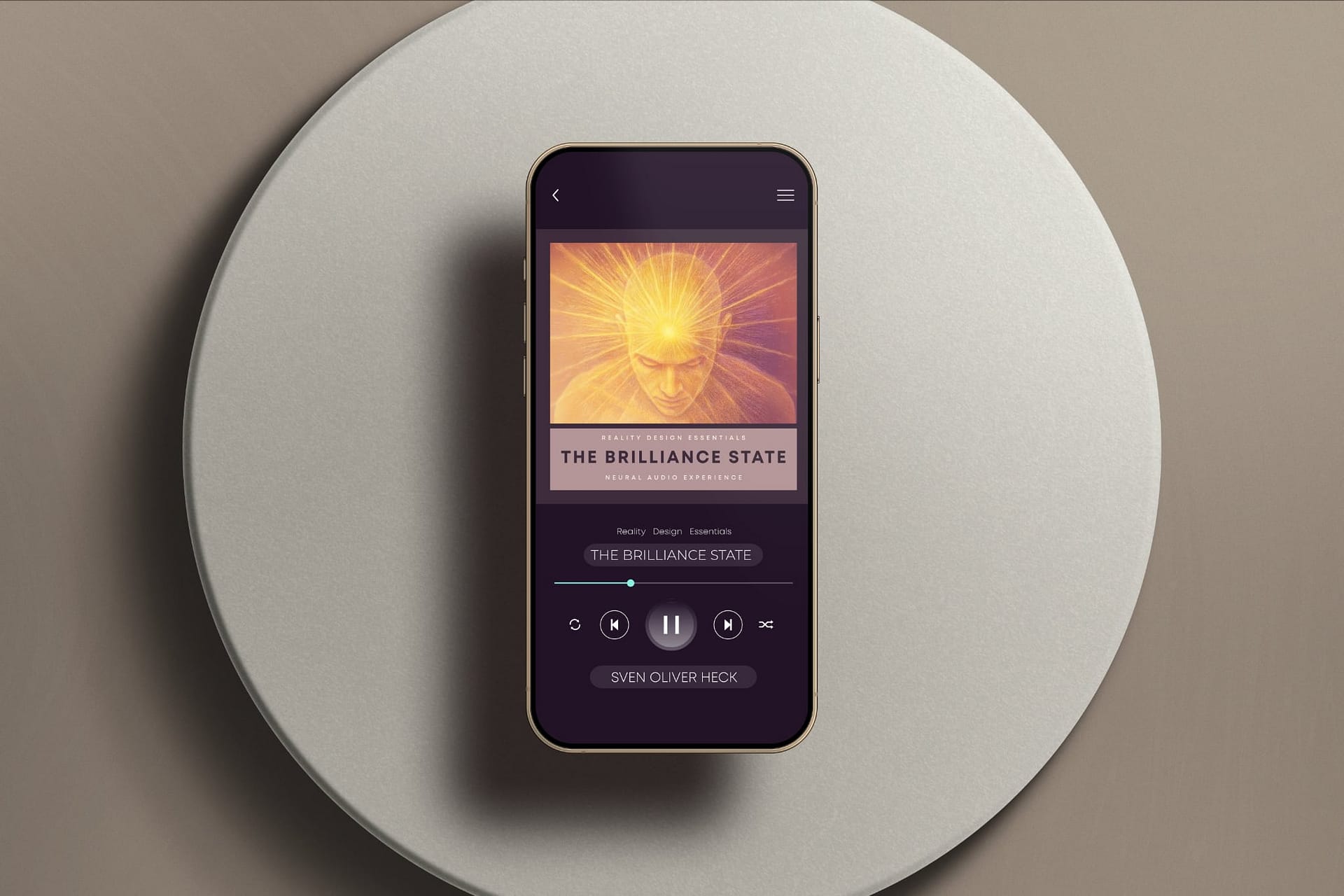
If that state feels familiar, a fast reset helps. The free 10-minute Brilliant State Meditation is made for exactly this kind of moment, when your mind is overloaded and you need to come back to center.
The more he tried to solve the fight directly, the more the fight took over his inner world.
And this is the part many people miss. The problem was not only the argument. The problem was the condition he was in when the argument was happening.
High performers tend to believe that if something matters, it can be solved with more clarity, more effort, and better communication. That works in business. It often fails in intimate relationships.
Why? Because love is not a boardroom problem.
When you’re upset, explaining your feelings can sound like pressure. Trying to be understood can come across as demand. The more you insist on your point, the more the other person braces. Now both people are speaking, and neither feels met.
This is why a lot of relationship issues do not improve through more talking alone. The issue is not that communication is useless. The issue is that communication becomes distorted when your body, emotions, and nervous system are already overloaded.
For empathic people, this gets stronger. If you’re sensitive, you don’t only hear the words. You feel the atmosphere. You feel the distance. You feel the tension in the room. And once you’re flooded, it gets hard to stay clear.
Most recurring arguments follow the same pattern.
You explain. You don’t feel understood. You explain harder. The other person gets defensive. Without active listening, this defensiveness escalates quickly, pulling both partners further from resolution. Healthy communication simply cannot happen if you cannot understand perspective in the heat of the moment. Now they explain their side. You feel even less understood. The ball keeps flying back and forth.
That is why trying to fix communication problems in a relationship by doubling down on explanation often makes the conflict worse.
Who you are in the room comes before what you say in the room.
Of course it helps to understand needs, boundaries, patterns, and history. Couples therapy can support that. Honest conversations matter. Clear language matters.
But there is a limit to what mind-based problem solving can do when both people are dysregulated.
If you’re exhausted, hurt, and reactive, your best explanation won’t land well. If your partner is in the same state, their best explanation won’t land either. This is why many people stay in cycles of personal insight without seeing a real shift. They understand more, but they are still bringing the same agitated state into the moment.
For accomplished people, this can be humbling. You cannot think your way out of every relational issue. Sometimes the deeper move is to stop trying to win understanding and come back to yourself first.
When I talk about your energy state, I am not talking about vague spiritual language or pretending conflict disappears if you “stay positive.” I mean something plain and observable.
I mean the condition of your nervous system. Your level of physical depletion. Your emotional steadiness. Your mental clarity. Your capacity to stay present without collapsing, attacking, or over-explaining.
Yes, the body has measurable electrical activity, including the heart. But you don’t need a theory lesson to know this is real. You can feel it the second someone walks into a room tense, shut down, warm, or open through nonverbal cues. Human beings register each other’s state all the time.
A strong state does not mean fake calm. It does not mean acting spiritual. It means you have enough inner stability to stay with what is happening without turning every feeling into a reaction.
That is a form of emotional regulation, and addressing underlying emotions like this restores emotional connection while allowing vulnerability rather than armor. It changes everything in close relationships.
If you want a more conscious relationship, you cannot skip this part. Your partner meets your nonverbal cues before they meet your words. They meet your presence before they meet your argument. This is why so many relationship problems are not solved by better talking points. The body is speaking first.
At work, many high achievers bring one strong slice of themselves to the room. They are focused. Energized. Competent. Clear. They know how to mobilize.
At home, it is different. You are softer there. More open. More tired. More honest, sometimes in good ways and sometimes in messy ways. The armor comes off.
And if you have spent the whole day producing, deciding, leading, and carrying responsibility, your physical reserves may already be low. Then one small comment, one look, one unmet expectation can feel like a tiny arrow that lands way too hard.
This is the moment many people know well.

Now you’re irritated by something that would not have touched you at 11 a.m. You are hurt by something you could have brushed off earlier. Then the dishes, the tone, the timing, the silence, all of it starts carrying more weight than it should.
And suddenly you are not arguing only about the dishes. You are arguing from depletion.
If you’re highly sensitive, you don’t simply observe your partner’s emotional state. You absorb part of it. That makes conflict in relationships more draining for you, especially when your nervous system picks up their tension.
So no, the answer is not to “just ignore it.” The answer is to build better boundaries while staying connected to yourself.
This is the power shift.
Before asking, “How do I make them understand me?” ask, “How stable am I right now? How clear am I? How present am I? How much of this conflict is being amplified by the state I am in?”
That question changes the whole game.
A lot of people wait for the relationship to improve so they can feel better. In practice, it often works the other way around. When your state improves, the relationship gets a chance to improve too.
This is not selfish. It is not avoidance. It is source work. Instead of handling the symptom, you work where the reaction begins.
The wrong question is, “When will my partner change?”
The better question is, “When will I start taking responsibility for the state I keep bringing into this room?”
That is where self-awareness and relationships meet in a real way. You stop making the other person the sole cause of your inner instability. You start seeing where you are under-resourced, over-extended, and easier to trigger than you want to admit.
For many successful people, relationship friction is not only a problem to remove. It is also a signal. It shows you where you are not in contact with yourself, where the high-functioning version of you disappears, and where life is asking for a more mature kind of presence.
You do not need a grand ritual. You need something that brings you back to yourself.
A few simple options:
The point is not to avoid the issue forever. The point is to stop entering the conversation as a flooded version of yourself.
I saw this in my own relationship too.
My partner, Alexandra, started cycling a few months ago. We live on a beautiful island, so of course it made sense. I supported it. I liked that she was doing something healthy and good for herself.
Then it became frequent. “I’m going for a ride.” Again. And again.
At first I noticed a part of me feeling left behind. We had done more together before, running, going to the beach, sharing that time. Now she was taking off on her own, and I could feel this quiet voice in me asking, “And what about me?”
It wasn’t dramatic. It was subtler than that. A little hurt. A little alone. And if I didn’t catch it, it came out sideways in small poisonous comments, the kind that are not fully honest but still land.
That was the moment I had to stop and tell myself the truth. If I keep reacting from that place, I will create conflict that has nothing to do with cycling.
So I changed the focus. Instead of watching her leave and feeding the story in my head, I started asking, “What will I do with this time that is good for me? What would make these hours high-quality for me too?”
That changed everything.
I began using that space for my own things, time alone that felt inspiring, grounding, and strengthening. And once I did that, two things happened. First, I started to enjoy the time. Second, I could genuinely see how much good the cycling was doing for her.
She came back calmer, more peaceful, more alive. And because I stopped fighting her growth and met it with my own, the energy between us changed.
That is the part people miss. When one person raises the quality of their state, the other person gets invited into a different relationship dynamic.
Not every relationship is meant to continue. Sometimes two people truly are not a fit. This approach does not erase that.
But many repeating fights are not proof that the relationship is wrong. They are proof that one or both people are depleted, under stress, and trying to solve connection while disconnected from themselves.
This is the difference in one glance:
| Symptom-level reaction | Source-level response |
|---|---|
| Explain harder | Regulate first, then speak |
| Push to be understood | Come back to clarity and steadiness |
| Focus on your partner’s flaw | Notice the state you are in |
| Fight late at night when tired | Pause, recover, revisit later |
| Treat the argument as the whole problem | See the argument as feedback about your state |
If you want to know how to stop arguing in a relationship, this is the move. Stop treating the surface issue as the whole issue.
Take the simple example from everyday life. You come home exhausted, stressed, and mentally fried. It is 10 p.m. Then a discussion starts about who is doing the dishes. In that state, it is rarely about dishes. It is about depletion meeting expectation.
So the next time tension rises, try this:
That one shift will not fix every relationship issue overnight. But it can stop you from pouring more stress into the same fire.
Once steadied, use these practical tools to de-escalate arguments and reopen connection. Start with a script like, “I feel overwhelmed right now, can we talk in 20 minutes?” This buys time without escalating.
The gentle start-up method helps with expressing feelings while avoiding blame. Pair it with the I feel exercise: “I feel frustrated when the dishes pile up because I am already tired from work.” This provides validation to your partner by acknowledging their side first, such as, “I get why this bothers you too.”
And if you want personal support with this pattern in your own life, you can book a private conversation.
If you keep trying to solve a relationship while bringing a scattered, hurt, or exhausted version of yourself into the room, the same arguments will keep returning in different forms. That is why so many smart people stay stuck.
The first shift is not better wording. It is better state. When you take care of that, your tone changes, your timing changes, your capacity changes, leading to more effective conflict resolution and higher relationship satisfaction; often the whole interaction changes with it.
Your relationship may not be asking for another explanation. It may be asking for a steadier you.