

Why You Feel So Isolated as a Highly Sensitive Entrepreneur
I used to lead workshops for leadership teams and look entirely at ease. The work went well. People valued it. What they could not see was how much I was…
You can build the life you once dreamed of and still sit there being successful but unhappy, asking, “What am I doing wrong?” If you’re searching for why accomplishment feels empty, you’re not alone. Many high-achievers find that while they’ve hit every external milestone, the inner sense of peace they expected never arrived.
If you’ve accomplished a lot and still feel a gap, it doesn’t mean you’re ungrateful or incapable of fulfillment. It usually means your success was built without enough self-awareness—without enough contact with who you truly are beneath the pressure, ambition, old pain, and performance. This guide explores why “being successful but unhappy” happens, and how to bridge the gap between your outer achievements and inner fulfillment.
A client once sat in front of me in his 50s. He had a beautiful house, a family, a multi-seven-figure business, and around 400 employees. By every normal standard, he had made it.
And still, he was in a bad state.
“I always thought when I achieve those things, I would be happy, but I’m not.”
That moment stayed with me because I knew the feeling myself. For a long time, I was chasing visions, projects, and outcomes. I wanted to make things happen. And often, I did. There would be that short peak, that brief rush, that moment of “yes, this is it.”
Then it faded.
What remained was not the lasting fulfillment I expected. Not the inner peace. Not the sense that life had finally landed in the right place. I see the same driven and dissatisfied pattern in founders, entrepreneurs, and leaders again and again. Capable people. Courageous people. People who don’t wait around. They set high goals, meet them, exceed them, then wonder why the inner reward never fully arrives.


This is where a lot of conversation about manifestation misses the point. Goals matter. Revenue matters. Building something meaningful in the world matters. But if you’re looking for peace through achievement alone, you’ll keep running the same loop. More effort. More creation. More results. Still the same question underneath.
What often fails is not your drive. It is the identity behind the drive. The self doing the wanting is often not your truest self.
You don’t need a collapse to notice this pattern. Sometimes it shows up in subtle ways first. A useful question is simple: how much satisfaction did you really feel from your last three big goal achievements?
You may notice that one or two felt good, maybe even beautiful. But you may also notice moments where the external success arrived and the inner response was strangely flat. The achievement happened, but the fulfillment did not. The thing you wanted came, but your deeper self never fully met it.
Then a second layer appears. You judge yourself for not feeling happier. You think:
What is wrong with me? Why can’t I enjoy this? Why does success not make me happy the way it should?
That self-judgment only adds pressure. It doesn’t bring clarity. The more useful move is to see the gap for what it is, information. It tells you that outer achievement and inner alignment are not the same thing. And until they start coming together, your life can look like outward success while still feeling incomplete.
This is one of the most important questions in self-discovery. Not “Can you get what you want?” but “Is what you want what you truly want?”
In the early years of building a career or business, it’s normal to chase goals. You build skills. You solve problems. You learn how to make things work. That part matters. It develops strength, discipline, and capacity.
But many of the wants driving those years are not yet rooted in self-knowledge.
Maybe you want social status. Maybe you want proof. Maybe you want financial security because some part of you is tired of fear. Maybe you want success because you believe it will finally make you feel worthy, seen, safe, or complete. These are extrinsic goals. They are human motives. Nothing strange about them. But they are often surface-level wants, or wants shaped by lack rather than alignment.
This is why high performance can still leave you asking, “What do I want in life?” or “How do I know what I want in life?” The issue is not that you have no ambition. The issue is that your ambition may be carrying old material inside it.
Here is the difference in plain terms:
| Extrinsic goals | Intrinsic goals |
|---|---|
| Seeks proof | Expresses truth |
| Chases status or control | Moves toward meaning |
| Comes from fear, lack, or old stories | Comes from inner clarity |
| Feels urgent and tight | Feels alive and grounded |
| Creates short peaks | Builds a meaningful life |
When you don’t yet know yourself, your wants can be impressive and still misaligned. They can produce a powerful life on paper and a hollow feeling inside it.
This is why no amount of goal achievement fixes the real issue if the real issue is disconnection from your authentic self. You don’t solve that by optimizing harder. You solve it through deeper contact with who you are.
Most accomplished people are not knowingly building the wrong life. That’s what makes this so important.
You’re not sitting there saying, “Let me create from old pain today.” You’re moving fast. You’re committed. You have standards. You know how to execute. So you keep going, and because you keep going, you often don’t pause long enough to ask whether the self behind the striving is still the one that should be leading your life.
That is why the dissatisfaction gets louder over time.
At first it is a quiet feeling after a win. Then it becomes a more serious question. Then it turns into a crisis of identity, purpose, or meaning. Some people search for “not happy with my life” or “depression after achieving goals” because what they feel is confusing. They got the thing. They still feel empty. They don’t know how both can be true.
Both can be true because outer success does not automatically create inner congruence.
A lot of modern self-development works horizontally. Better habits. Better output. Better performance. That has value. But it doesn’t touch the deeper layer. If the wanting itself comes from an outdated identity, then more achievement only strengthens the structure that already isn’t satisfying you.
The deeper work is vertical. It changes consciousness, identity, and the place you create from. That is where the real shift begins.
If you’re wondering how to know yourself, how to understand yourself, or how to find yourself after years of performance, the first answer is not another strategy. It is awareness.
Most high-achievers spend extraordinary energy on the outside. Business. Family. Pressure. Delivery. Problems. Decisions. They bring focus, courage, and curiosity to all of it. But they rarely give the same quality of attention to their inner life.
That is why self-awareness matters so much. It lets you notice what your achievements are not giving you. It lets you see where your motivation is clean and where it is compensating for something older. It lets you sense the difference between a goal that expands you and a goal that drains you.
This is not abstract. It is practical.
When you achieve something and feel flat, that is data. When you notice that a win gave you stimulation but not inner contentment, that is data. When you realize that your life is full but your inner well-being is not at rest, that is data.
Awareness gives you clues.
It helps you see:
This is the beginning of self-discovery. Not a performance. Not a concept. A more honest relationship with your own experience, sparking personal growth.
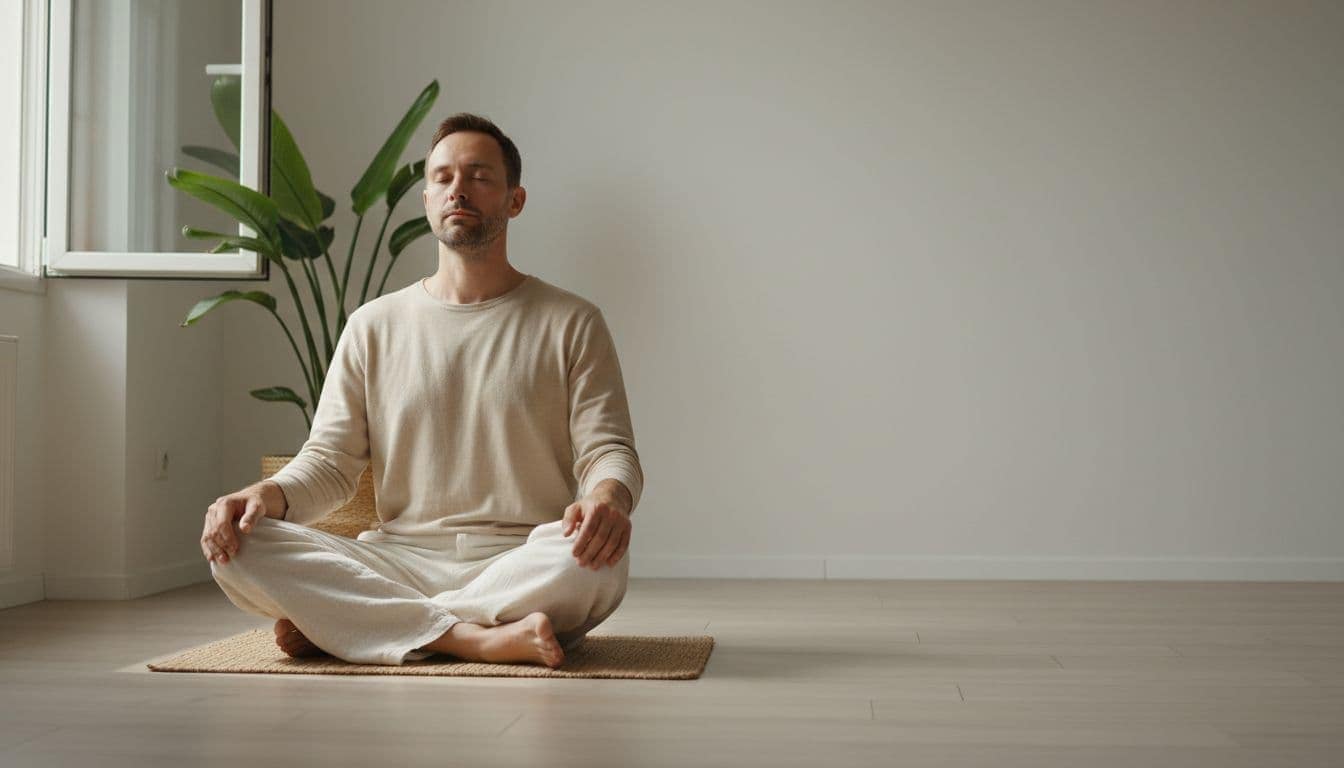
For many people, presence needs practice. If your mind is crowded and your nervous system is constantly activated, it can be hard to hear anything subtle inside yourself. That is why I created the Brilliant State meditation, a short guided practice designed to help you return to clarity, presence, and well-being. You can get the free Breakthrough Mind Tools and 10-minute Brilliant State meditation if you want support reconnecting with yourself.
You do not need all the answers at once. You need enough inner clarity to notice what is true.
There was a moment in my own life that made this painfully clear.
When we found this place here in Mallorca, I was overwhelmed by how beautiful it was. We had been looking for a home for years. When I arrived, I cried. It felt like a real manifestation, a real accomplishment, something I had wanted for a long time.
And then, after the emotional peak passed, I found myself sitting there some days thinking: this place is beautiful, I know that. I am grateful. And still, gratitude alone could not provide the feeling of fulfillment I thought I would feel.
That experience taught me something essential. The gap between goal achievement and internal peace can leave you appreciating what you’ve built, yet sensing that something in you has not fully arrived.


The problem wasn’t the place. The problem wasn’t that the goal was bad. The gap was between creating things and knowing myself fully enough to receive life from the depth I was longing for.
This is a subtle but life-changing distinction.
A lot of people think fulfillment comes when the right external condition is secured. More money. Better home. Recognition. Freedom. Certainty. But if your inner world is still disconnected from your deeper truth, even beautiful things can land on numb ground.
When you notice this gap, don’t turn it into another reason to attack yourself.
You don’t need to say, “I should be happier.” You don’t need to pretend your success feels better than it does.
Instead, treat the gap as a message.
It may be telling you that the life you’re building has not yet caught up with the truth of who you are. It may be telling you that your external success outpaced your inner development. It may be asking for more self-knowledge, more honesty, more contact with your deeper source.
That kind of signal is not a failure. It is the beginning of a more meaningful life.
Something beautiful happens when self-awareness grows. Your wants start to change.
Not always in dramatic ways. It is not necessarily that you burn down your career or abandon your ambition. Often the field stays similar, but the quality of your wanting becomes different. More honest. More alive. Less reactive. Less driven by extrinsic goals, old hurt, old scarcity, or the need to prove yourself.
This is where getting to know yourself starts changing your life in a real way. You stop creating mainly to fill a hole. You begin creating because expression itself feels right. Because the work is meaningful. Because there is value in it. Because it is connected to purpose, not only pressure.
And then another shift appears. You start loving the process more.
That matters. A lot.
When your life is built from your deeper truth, the act of creating becomes more satisfying, with greater autonomy. Even if a specific goal does not happen exactly as planned, the process can still feel worthwhile. You are no longer depending on the peak moment alone. There is more substance in the day-to-day experience of being yourself.
This is the heart of what I call Reality Design. Not magical thinking. Not superficial manifestation. Not using spiritual language to avoid the hard parts. It is the intentional building of your life from inner knowing, from Source rather than ego, from your essential nature rather than old conditioning, leading to self-actualization.
That changes everything important without requiring performance around it.
You become less dependent on loud highs. More rooted in a consistent sense of inner peace. More available for meaningful impact. More able to live with both success and depth, not one at the expense of the other.
This is also why business and inner life are not separate. The way you lead, create, earn, decide, and relate will always express the consciousness you are living from. When that inner place becomes clearer, your outer life becomes cleaner too.
People around you feel it. Your family feels it. Your team feels it. Your work carries a different quality because you carry a different quality.
That is not ego-centered. It is more aligned, and usually more beneficial for everyone involved.
One of the biggest obstacles to knowing yourself is emotional exhaustion.
Many emotionally aware, high-capacity people feel too much at once. Thoughts, emotions, responsibilities, sensitivity, pressure, time scarcity, loss of autonomy, unfinished inner material, all of it can pile up until there is no clean space left to hear yourself. In that state, self-discovery feels harder because everything inside is loud.
And when everything is loud, not everything deserves your attention.
This is important. You do not need to feel all of it. Some things need care. Some things need space. Some things need to be dropped. If you are constantly flooded, presence becomes difficult, and without presence, self-awareness gets blurred.
Clarity comes when you stop identifying with every inner movement and begin noticing what is truly yours, what is old, and what no longer needs to lead. This inner clarity supports better work-life balance and stronger mental health.
If that is where you are, my video on not feeling all of it may help you create more space inside yourself. That space is not emptiness. It is the place where self-knowledge becomes possible.
And if you are at the point where external success is no longer enough, where you know something in your life wants a more truthful foundation, you can schedule a conversation about professional guidance. My work is for founders, leaders, and high-achievers who are ready to live from who they actually are.
Many high achievers feel successful but unhappy because their ambitions are driven by extrinsic goals—like the need to prove worth or escape fear—which provide short-term wins but no lasting fulfillment. This state of being successful but unhappy is often a signal that your outer accomplishments are disconnected from your inner truth. Self-awareness helps you identify this gap and shift toward building a life that feels aligned rather than just productive.
Extrinsic goals feel urgent, tight, and proof-seeking, while intrinsic ones feel alive, grounded, and expressive of your truth. Notice if wins leave you flat or if the process lacks substance—that’s a sign of misalignment. Deeper knowing shifts your ambitions toward meaning over performance.
Self-awareness notices where motivation compensates for something older and highlights the difference between draining and expanding pursuits. It turns inner signals into clarity, changing how you create and lead. Without it, more achievement just amplifies the same dissatisfaction.
Begin with presence: treat post-achievement flatness as data, not judgment, and practice stillness to hear your deeper nature. Tools like meditation help clear emotional noise for honest contact with yourself. This vertical work aligns your life with who you truly are.
Not at all—self-knowledge refines ambition, making the process more enjoyable and outcomes more impactful without dependency on peaks. You create from purpose and peace, not pressure. Your work and relationships carry a cleaner quality as a result.
If success has not made you happy, it does not mean success was a mistake. Due to the law of diminishing returns, more success simply does not lead to more happiness. It means success alone was never the whole answer. The missing piece is often self-awareness, the kind that lets you see what has been driving you and what your life is asking for now. Paths like nurturing close relationships and pursuing incremental self-improvement can lead to a more grounded life.
When you know yourself more truthfully, your wants become cleaner. Your purpose becomes clearer. Your way of creating becomes more peaceful. You stop chasing fulfillment as if it lives in the next result, and you begin building from the place in you that already knows what matters, guided by intrinsic goals that unlock a lasting meaningful life.
You can only get what you truly want when you know who you truly are.