Why Do I Feel Lost Even When Life Is Good?
Your life can look good from the outside and still feel strangely far away from you. You may be healthy, productive, successful, surrounded by beauty, and yet something in you…
Relationship problems of successful people often stem from the very habits that make them excel in their work. You’ve mastered the art of the climb—the projects, the revenue, the reputation. Yet, when you come home, that same competence feels like it vanishes. You’re exceptional at work, but at home, you feel like an imposter, frustrated and disconnected.
The irony is tough: for many high-achievers, the very discipline that builds a career is the same force quietly dismantling their closest relationships.
If your business results are stellar but your personal life feels like a constant, draining negotiation, the problem likely isn’t your partner or your lack of communication skills. It’s a relationship you’ve been unintentionally neglecting: the one with yourself.
I had periods in my own career where I was creating strong results in the world. My work had traction. The things I built mattered. From the outside, that looked like success.
At the same time, I felt frustrated, angry, and sad about some of my closest relationships. That showed up with my partner, with friends, and with family. So I kept wondering how both things could be true at once. How could I be so effective in one part of life, yet feel so powerless in another?
This split is one of the most common relationship problems of successful people, and high performers rarely admit it out loud. You know how to build. You know how to lead. You know how to solve. Yet when the people closest to you trigger pain, distance, or conflict, all that strength can suddenly feel useless.
The hardest part is that you often keep moving. You stay productive. You keep handling meetings, decisions, timelines, and pressure. Meanwhile, emotional weight builds in the background. You carry it, suppress it, and try to outwork it.
When work succeeds but home fails, the problem is rarely only the relationship. It’s often the loss of connection with yourself.
When it comes to high achievers and relationships, the pattern looks the same — especially for high-achieving men. They often apply high standards to their results but struggle in relationships when those same metrics don’t apply. Your business works. Your team may even love working with you. But the relationships that matter most start to feel heavy.
You notice things like:
Because you’re used to operating at a high level, you treat the problem like something to solve. However, relationships don’t respond to force the way projects do.
This is where many successful people get stuck. In business, pressure often improves focus. In relationships, pressure often creates more defense, more tension, and less truth.
You may think that if you explain yourself one more time, the other person will finally understand where you are and what you need. You may try to present your case clearly, logically, and persuasively. Yet that rarely creates the shift you want.
When a relationship feels strained, high performers often go into repair mode. You overexplain yourself. You try to make the other person see what they got wrong. You argue for your intention. You defend your position. You search for the right words, the right framing, the right timing.
Then the same thing happens. Voices rise. Emotions take over. Another evening ends in conflict instead of closeness.
That happens because relational pain is not only an external problem. It is mostly an internal one. If something in you is hurt, exhausted, shut down, or disconnected, no amount of verbal precision will fully solve it. Fixing an intimate relationship requires more than just problem-solving or communication; it requires meeting emotional needs that logic cannot address.
In other words, close relationships expose what your professional identity can hide.
The real turning point comes when you stop trying to control the relationship from the outside and bring your attention back to yourself. Not in a selfish way. In an honest way.
For years, you may have poured your creative energy into building companies, leading teams, launching projects, and driving outcomes. That creates real-world success. Yet it can also come with a quiet cost.
Here is what often gets neglected during those years:
You become available for everyone else. Your work. Your team. The next demand. The next move. Then you come home depleted and expect connection to happen. But it usually doesn’t.
That is why this work is an inner game. If you want better relationships, you need a better relationship with yourself first.
Success asks a lot from you. Focus. Energy. Drive. Sacrifice. The problem begins when the way you achieve becomes the way you live.
At first, autopilot can feel efficient. You push through. You stay on. You perform. However, after enough years of doing that, you can lose touch with your own inner state. You stop noticing your needs. You stop expressing what is happening inside you. Then you wonder why your relationships feel dry, reactive, or painful.

When you’re building something meaningful, your energy moves outward. You create. You decide. You lead. That outward force can be exciting, but it can also pull you away from your own center.
Professional success often requires sacrifices in vulnerability, as mental toughness can unintentionally create emotional distance. Over time, many high-achievers start to live in a state of self-abandonment without realizing it. They know how to deliver. They know how to stay strong. They know how to keep going. What they don’t know anymore is how to return to themselves.
That is often the hidden price of achievement without inner alignment. You may look capable and powerful, yet privately feel thin, brittle, or emotionally unavailable.
From a Reality Design perspective, this matters because being precedes doing. Outer success without inner connection tends to create a split. You can still perform. You can still win. But you won’t feel whole.
I reached that point myself during a phase of strong professional success. On paper, things were working. In my relationships, they were not.
I kept trying to solve the problem in the outer world. I explained. I argued. I defended. I pushed for understanding. None of it created the shift I wanted. In fact, it often added more frustration.
Then I had to face something deeper. I had neglected my connection to myself. I wasn’t taking care of what I truly needed. I had suppressed emotions for so long that I barely felt them clearly. I was in denial, not because I was careless, but because I was moving too fast to notice.
The deeper truth was simple and hard at the same time. I was not being a good friend to myself. I had high standards at work, but neglected myself and brought hardness into my inner world. That created a spiral of self-pressure, negative self-talk, and emotional disconnection.
When those feelings rise, most people don’t sit down and meet them. They avoid them.
Common escape routes include:
These habits are not random. They are often attempts to avoid the pain of disconnection from self.
I see these relationship problems of successful people again and again with founders, entrepreneurs, and leaders. It comes up in retreats, coaching, and deep personal work. So if this feels familiar, you’re not doing something wrong.
You’re seeing what happens when outer performance grows faster than inner relationship. That isn’t shameful. It is human. Yet it does need attention.
One reason this pattern can stay hidden for so long is that work rewards your professional mask. At work, you know your role. You know the rules. You know how to show up.
At home, that mask falls away.
Many successful people tell me the same thing. Their teams appreciate them. They are respected as leaders. They can hold space, solve problems, and stay composed.
Then they go home and everything changes. A small comment triggers irritation. A child ignores them. A partner feels far away. Tension rises faster than expected.
That contrast is not random. The workplace often lets you function from competence. Home asks for genuine connection. Work lets you perform. Close relationships require you to be emotionally available.
When you are disconnected from yourself, that difference becomes obvious.
A strong self-relationship is not perfection. It does not mean you feel peaceful every hour of every day. It means you relate to yourself with honesty, kindness, and care.
High achievers develop emotional awareness to ensure their presence at home is genuine rather than performative. When you are connected with yourself, you are more likely to notice what is happening before it spills onto others. You can feel your limits. You can sense your needs. You can respond instead of react.
The contrast often looks like this:
| Disconnected from yourself | Connected with yourself |
|---|---|
| Draining relationships | Supportive relationships |
| Constant frustration | More emotional clarity |
| Suppressed feelings | Honest self-awareness |
| Reactive conflict | More grounded responses |
| Harsh self-talk | Compassion and patience |
The shift is subtle at first, then profound. As your relationship with yourself improves, your relationships with others often become less charged and more real.
This idea became real for me in a humbling way. I had been a therapist for 15 years. I had worked as a coach. I understood emotional intelligence, emotional regulation, and unconscious dynamics. I knew the models. I knew the language.
Still, I was having relationship trouble.
There were times when friends left. There were periods of steady conflict with my partner. There was frustration with family dynamics too. So even with all my training, insight alone did not fix the issue.
That mattered. Because it showed me something important. Information is not the same as transformation. You can understand emotional patterns and still be disconnected from yourself.
That is also why optimization alone rarely solves this kind of pain. The ego can become better informed and still remain out of touch with what the deeper self needs.
My breakthrough came when I stopped asking, “How do I make them understand me?” and started asking, “How do I return to myself?” Therapeutic work involving inner-child work and shadow work helped me recognize how I was over functioning at the expense of my self-worth.
That changed everything.
I saw that focusing on myself was not egocentric. It was necessary. I had spent years giving energy to work, ideas, goals, and responsibilities, while neglecting the most important relationship in my life.
So I made a clear inner decision. I wanted to become my own best friend. I wanted to treat myself with more compassion. I wanted to learn kindness. I wanted to practice forgiveness toward myself.
That choice created release. Because many of the outer conflicts I was fighting were rooted in the way I had abandoned myself inwardly.

Once I saw the root issue, I could make small but meaningful changes. Nothing flashy. No performance theater. Simple acts of reconnection.
That included things like:
These are small shifts, but they change the atmosphere of your life. They help you move from self-neglect toward self-trust. They help you design life from a deeper place, not from exhaustion and inner division.
If your relationships feel strained, start with honesty. Notice how you treat yourself. Notice whether you feel connected to your own inner world, or whether you’ve been running on pressure, habit, and momentum.
If you feel out of touch with yourself, the next step is not to force another conversation. The next step is to reconnect. First with yourself. Then with the other.
That reconnection can look different for different people. The form matters less than the sincerity behind it.
You might return to yourself through:
What matters is this, do what helps you feel yourself again. Do what helps you come back into alignment. Do what helps you say, “I’m with myself again. And we are best friends.” While these habits help you reconnect inwardly, building healthy relationships often calls for restoring intimacy and emotional connection, and sometimes relationship coaching provides the guidance needed for that deeper restoration.
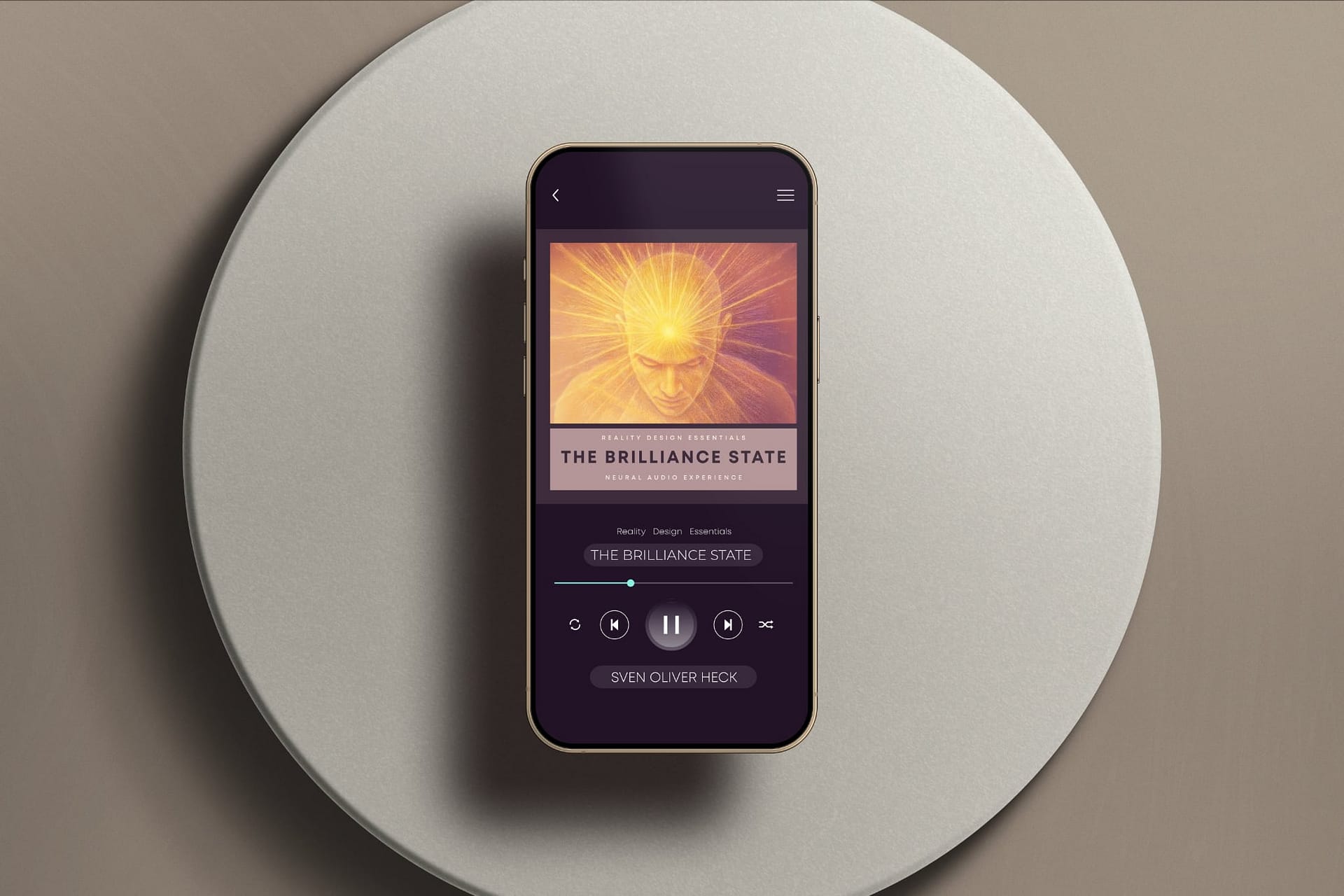
If you want support with that, download The Brilliance State Meditation, a free 10-minute guided practice with more than 160,000 listens on Insight Timer. People use it to return to mental, emotional, and energetic clarity.
If you’re ready for deeper support, you can also schedule a conversation about working together.
Not every hard relationship should end. Some need space. Some need honesty. Some need real work. And some do need to be left behind.
If you’re in that kind of situation, it may help to watch Sven Oliver Heck’s video on ending difficult relationships so you can better sense whether this is a season to repair, or a moment to let go.
Most relationship problems of successful people are not actually communication problems. If your outer life looks strong but your closest relationships feel painful, don’t assume the answer is better communication alone. Communication matters, but it sits on top of something deeper.
The deeper issue is often self-relationship. When you reconnect with yourself, you become more present, more grounded, and less dependent on others to regulate what you have not yet faced within.
Mitigating the stress spillover effect is the key to lasting happiness and a stable self-relationship.
That is where better relationships begin.
Start there. Then watch what changes.
Successful people often carry work habits into their personal life. They use pressure, control, and problem-solving to handle emotional issues. But relationships need presence, honesty, and emotional awareness, not just performance. When someone is disconnected from themselves, that pain often shows up in marriage, family life, friendships, and communication.
Yes. But career success alone does not create emotional health. If you want healthy relationships, you need self-awareness, rest, and the ability to notice your own needs before they spill into conflict. Career success and relationship health can support each other, but only when inner balance is part of the picture.
High achievers are often trained to stay strong, stay busy, and keep performing. That works well in business, but it can create emotional distance at home. Family and partners usually need openness, vulnerability, and real presence. If a person has abandoned their own emotions, home life can start to feel tense or draining.
For many successful people, the deeper cause is self-abandonment. They stop noticing what they feel. They ignore their own needs. They keep pushing forward even when they are exhausted, frustrated, or sad. Over time, that inner split can damage relationships with a partner, friends, and family.
Start by slowing down and noticing your inner state. Pay attention to your energy, your emotions, and your needs. Simple practices like rest, movement, meditation, journaling, and time in nature can help. The goal is to become more honest, kind, and present with yourself.
Yes. Self-awareness often improves communication, reduces reactivity, and creates more emotional safety. When you understand your own triggers and needs, you are less likely to blame, overexplain, or argue from pain. That can make your marriage or partnership calmer and more connected.
Overworking can keep you in survival mode. It drains your energy and leaves little room for emotional presence. If you keep giving your best to work and have nothing left for home, your closest relationships will feel the impact. Burnout often leads to irritability, numbness, and less patience.
Do not rush straight into blame or fixing. First, check in with yourself. Ask what you feel, what you need, and what you may be avoiding. Then choose a calm conversation from a grounded place. If the problem is deep, you may also need support, space, or professional guidance.
No. In many cases, it is necessary. Focusing on yourself is not the same as ignoring others. It means becoming more honest, regulated, and emotionally available. A healthier relationship with yourself often creates a healthier relationship with others.
Not every hard relationship should end, but some cannot be repaired in a healthy way. If a relationship remains harmful, abusive, or completely closed to change, ending it may be the right choice. Some relationships need repair. Some need distance. Some need to be released.