I’m in an in-between phase, my identity shifting from the old to the new. Knowing a great deal about human development hasn’t kept me out of the troubling aspects of it. After years as a therapist and coach, hundreds of books, and countless workshops, I can feel that the identity I’ve lived in has become too small.
If the person you’ve become no longer fits, I don’t think the answer is always another version of yourself to pursue. For me, the work is a more truthful connection with myself, something I first had to confront after reaching the success I’d spent ten years pursuing.
Key Takeaways
A successful career or familiar identity can stop feeling like a good fit, even when it once helped you build a life you value.
Discomfort during an identity shift deserves care in its own right, and it can also prompt you to ask what feels missing or disconnected.
Self-understanding and personal development can help, but they can’t replace living through experiences whose outcomes you can’t control.
Honest attention to your actions, feelings, thoughts, and beliefs can bring clarity without turning reflection into self-judgment.
A steadier connection with yourself can help decisions feel more coherent and meaningful, without requiring you to give up ambition or make a dramatic change.
Ten years of work, and then nothing
Before I worked with people, I wanted to make movies. Big productions. I gave everything I had to learning the skills, getting the work, and reaching the place I thought would make me feel successful.
After ten years of hard work, I got there.
I was at the premiere of a major project, sitting with the director and the stars. The movie ended. My name appeared in the credits. This was the moment I had been waiting for.
And I felt nothing.
That was a shock. I had invested so much in reaching that point, nearly pushing myself into burnout to make it possible. Yet the fulfillment I expected wasn’t there.
I could keep making projects, but unless I found what I was longing for inside myself, I would keep asking achievement to give me something it couldn’t provide.
I left that work. What followed was another messy period, another change in how I understood myself. I needed a lot of therapy and coaching to understand who I was, what had happened, and how I had brought myself so far without noticing the cost.
Through that process, I began working with people. Making movies had its value, but direct human interaction felt more satisfying to me. There was contact. I could be with someone and work with what was happening between us.
That became a different kind of work, and a different way of understanding what matters.
When doing everything right stops working
I work with people who have built successful lives. They have careers, beautiful homes, employees, qualifications, and the freedom to travel. Many have approached all of this sincerely, wanting to do good work and become the best version of themselves.
Then something inside them begins to say: this role no longer holds all of who you are.
I recognize that place because I’m in it again. Part of me would like the familiar ways to keep working. Another part senses that a next move is needed, even before I can fully name it.
I don’t see this as a judgment on what came before. The career, the ambition, the identity that helped build a life may all have been valuable. They may simply no longer offer enough room for everything a person is.
I find success can make that gap harder to recognize. When my work keeps producing results, my perception of the role behind it can stay fixed, with little reason to question it. I can remain loyal to a capable version of myself long after other parts of me need attention.
I want to respect the person I became without treating that identity as the whole truth of who I am.
What the discomfort may be asking for
The sense that something no longer fits doesn’t always arrive as a clear understanding. It can appear as tension, worry, anxiety, exhaustion, depressive episodes, mood swings, or an emptiness you can’t quite explain.
In the context of an identity shift, I hear a question underneath that discomfort: what is missing, and what would help you feel more at home inside yourself?
I don’t take these feelings as proof that my sense of self is changing. Anxiety, depression, and ongoing exhaustion deserve attention in their own right. But I also don’t want to overlook what persistent disconnection may be asking me to see, especially during life changes.
Working with people has shown me something I keep returning to. Each person has a different history. There may be childhood experiences to work through, particular problems, or circumstances that need to change.
Underneath those differences, I often encounter a shared longing: a more real, more truthful connection with themselves.
That changed how I understand meaningful work. Building companies and completing projects can matter enormously. Still, I know in my heart that becoming more fully who you are deserves at least as much attention as everything we are trying to create.
Wanting growth while staying in control
When I was learning about human development, part of me wanted more than understanding.
I wanted to be safe.
I wanted the experience, the progress, the growth. My mindset was that I could still know how it would happen. If I understood enough, perhaps I could manage the process and avoid being taken somewhere unfamiliar.
My experience is that life doesn’t always cooperate with that wish. It can pull me into experiences I wouldn’t have chosen or known how to plan. Those experiences may reveal something that another rational explanation couldn’t reach.
There are valuable methods for understanding ourselves. Therapy, coaching, and personal development can help us go further into our experience. I have benefited from that work, and I continue to value it.
But understanding a process doesn’t exempt me from living through it.
I can know my patterns, recognize my fears, and have language for what is happening, while still needing to enter an experience whose outcome I can’t control. That uncertainty is part of what makes this phase messy.
It is also where something I haven’t yet understood can become visible.
When self-development offers another identity
A great deal of personal development promises a new identity: the best version of yourself, the next breakthrough, the possibility of becoming whoever you want if you give enough and push hard enough.
I don’t believe that promise is true in the deepest sense.
There may be things I would love to have that aren’t true to my heart. A direction can sound impressive, even inspiring, and still leave me disconnected when I begin moving toward it.
Some of the things I did to discover myself had that effect. They encouraged me to believe in an appealing self-image, another version of who I could become. That version didn’t necessarily bring me closer to myself.
I don’t feel resentful about those experiences. Many were good. Some were difficult. I learned through them.
What I question is the self-concept that becoming more developed, more accomplished, or more impressive automatically means becoming more whole.
The same caution applies to reflection. I can journal, examine my patterns, and maintain practices that help me stay on track, while still avoiding what remains outside immediate awareness, sometimes called the subconscious.
The practice may be useful. What matters is whether I’m using it to meet myself or to maintain another idea of who I should be.
The honesty that comes before clarity
For me, an identity shift begins with honesty without judgment.
I need to see how I’m living: the small daily actions I take, the feelings that are present, and the thoughts moving through me moment to moment.
Discernment matters here. Acceptance doesn’t require me to pretend that every choice serves me. I can recognize what creates friction or distance without turning that recognition into an accusation against myself.
You can begin with one recent moment when you felt tense, drained, or as though you were trying too hard. Notice your actions, feelings, thoughts, and beliefs, especially what you believed you had to be in that situation.
There is no need to force an answer or immediately decide what must change. The first movement is simply to notice more accurately.
When I give myself space and listen without labeling every mood as bad or every action as right or wrong, things can become clearer. I begin to sense what I need and what feels true.
That kind of clarity has a different quality from a mental picture of the person I should become. It comes through contact with my actual experience, not my perception of who I should become.
I can’t demand it on a schedule. I can make room for it.
The courage of seeing the whole picture
Meeting yourself in this way sounds simple. In my experience, it takes courage and self-love.
There may be reasons you learned to live carefully. Perhaps you lost confidence in yourself. Perhaps decisions didn’t work out, or you came to doubt your self-worth. Those experiences can accumulate until control feels safer than openness.
Then, when you begin listening, you encounter more than the feelings you hoped to find.
You may see your flaws and your beauty. What you long for. Where someone has hurt you. What you might have achieved but didn’t. Where time was lost, and the uncertainty of how much time remains.
I find this confronting because it asks for the capacity to be with the whole picture.
Pushing those experiences away keeps me at a distance from myself. Becoming overwhelmed by them doesn’t create the stability I’m looking for either. The work is learning to let them be present while remaining in relationship with myself.
There is something ordinary about this process. No dramatic announcement is required. Yet it can feel like a profound risk, because the familiar ways of protecting myself are no longer keeping everything out of view.
This is what I mean by coming home: being with my true self, not uncovering a perfect or separate version of me. It’s learning to be with who I am, including the parts I would rather not see.
Decisions made from a different place
As that relationship with myself becomes more stable, I notice a shift in where decisions come from.
Fear, control, and wanting something badly can all drive a choice. I know those movements in myself. They can create a great deal of activity without creating a sense of coherence.
When I’m more present with myself, a decision can feel different. It can feel more honest and coherent, with a stronger sense of alignment. It can also feel more meaningful and natural.
I have a clearer sense of whether an action fits, rather than only whether it might produce the result I want.
That doesn’t mean ambition disappears. It means the quality of wanting can change. Work can become an expression of who I am, with less pressure to make it supply a missing sense of self.
I also notice this in my work with people. When I come with acceptance, discernment, and no judgment, there is room to explore what is actually there.
What brings friction? What creates a sense of expansion? What needs attention? What can be let go?
Those questions don’t demand an improved personality. They allow a person to recognize more of themselves and begin living from that recognition.
For me, that is one of the most beautiful things that can happen in this work.
A lifelong process, with a next move
I don’t believe transformation has one final step that completes the process of becoming yourself.
During life transitions, there are moments of recognition. Points along the way when I can feel that I’m getting closer. My experience becomes more real, and I have more capacity to stay with it.
Relationships, projects, ideas, and visions can all participate in that process. I see them as ingredients in a larger project: learning to live in connection with myself.
That’s how I’m approaching this messy phase. I’m practicing letting go of the demand to know exactly how it should unfold. I’m giving myself permission to experience what is happening.
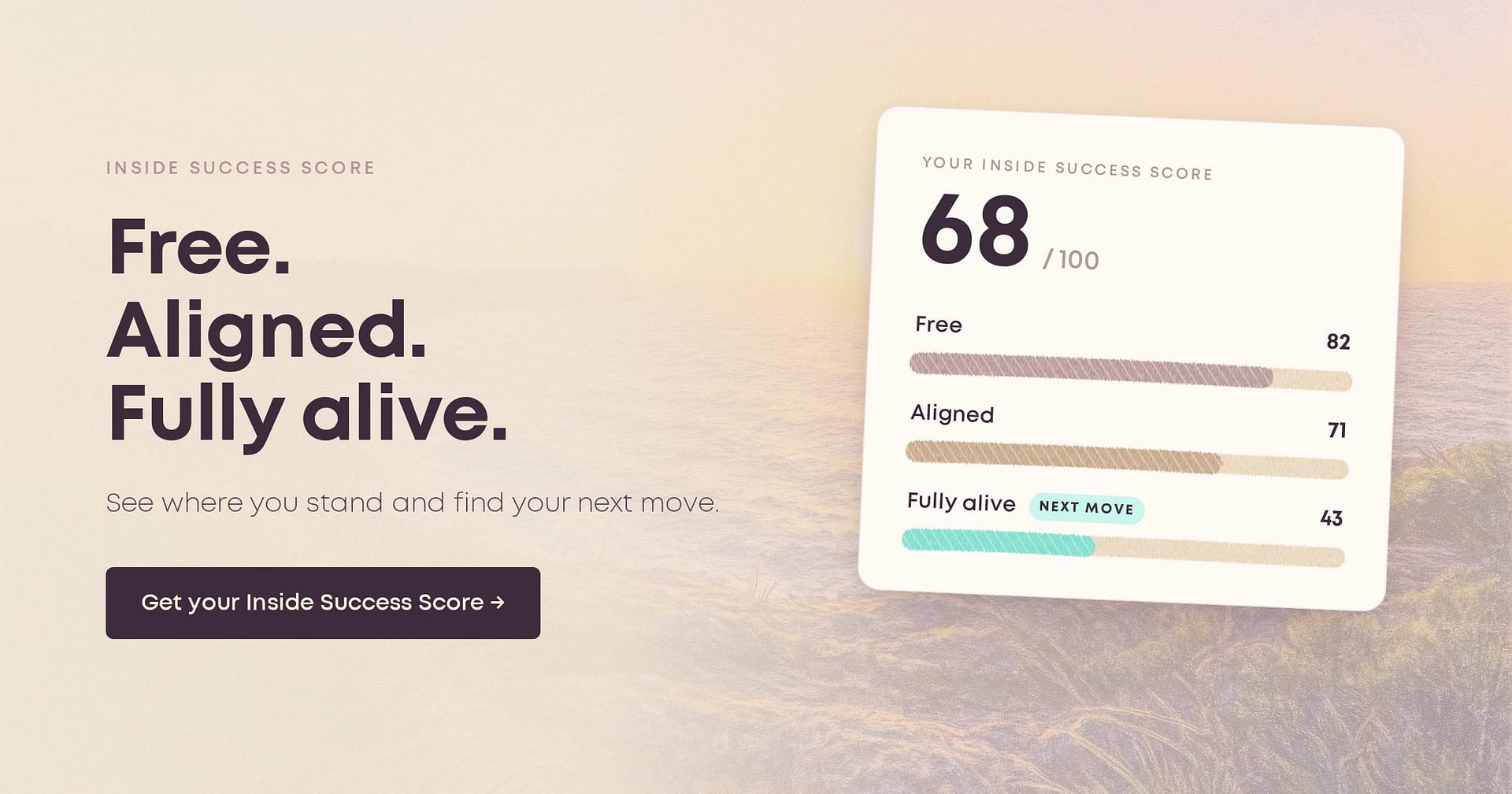
If you’re in a similar place, it can be difficult to know where to put your attention first. I created the free Inside Success Self-Assessment to help you reflect on where you stand and what your next move might be.
The questions may offer a starting point. What matters is listening honestly to what becomes visible.
A few questions about an identity shift
Does this mean leaving a successful career?
Leaving film work was part of my path. I wouldn’t turn that decision into a prescription for yours.
You may continue in the same field while changing how you work, what you want, or how much of yourself your work allows you to express. Understanding what no longer fits comes before deciding how much needs to change.
Does surrender mean becoming passive?
I understand surrender as participating without insisting on complete control. It can include honest reflection, seeking support, and making decisions while accepting that you don’t yet know the whole path.
There is still responsibility and action. There is also room for an experience to teach you something you couldn’t have planned.
More room to be yourself
The person I became helped me reach this point. I can value what that identity made possible and still recognize that I need more room to live.
For me, coming home to myself means building the capacity to meet what is here with honesty, care, and discernment. That is the work I want my decisions to grow from.
If you’d like individual support as you explore what no longer fits and what wants your attention, Work with me.
I'm Sven. I work with introspective entrepreneurs who've built real success on the outside and lost themselves on the inside.
People who sense the next chapter isn't about achieving more, but about becoming themselves again.
Not through performance. Not through another framework.
By coming back to the source, and living your life from there.
The Breakthrough Method 90,000 Listeners Have Used to Shift Into Inner Freedom in 20 Minutes
A 20-minute guided session that moves you out of fear-based reactions and self-doubt into steady, grounded power — so you respond from choice instead of reflex.
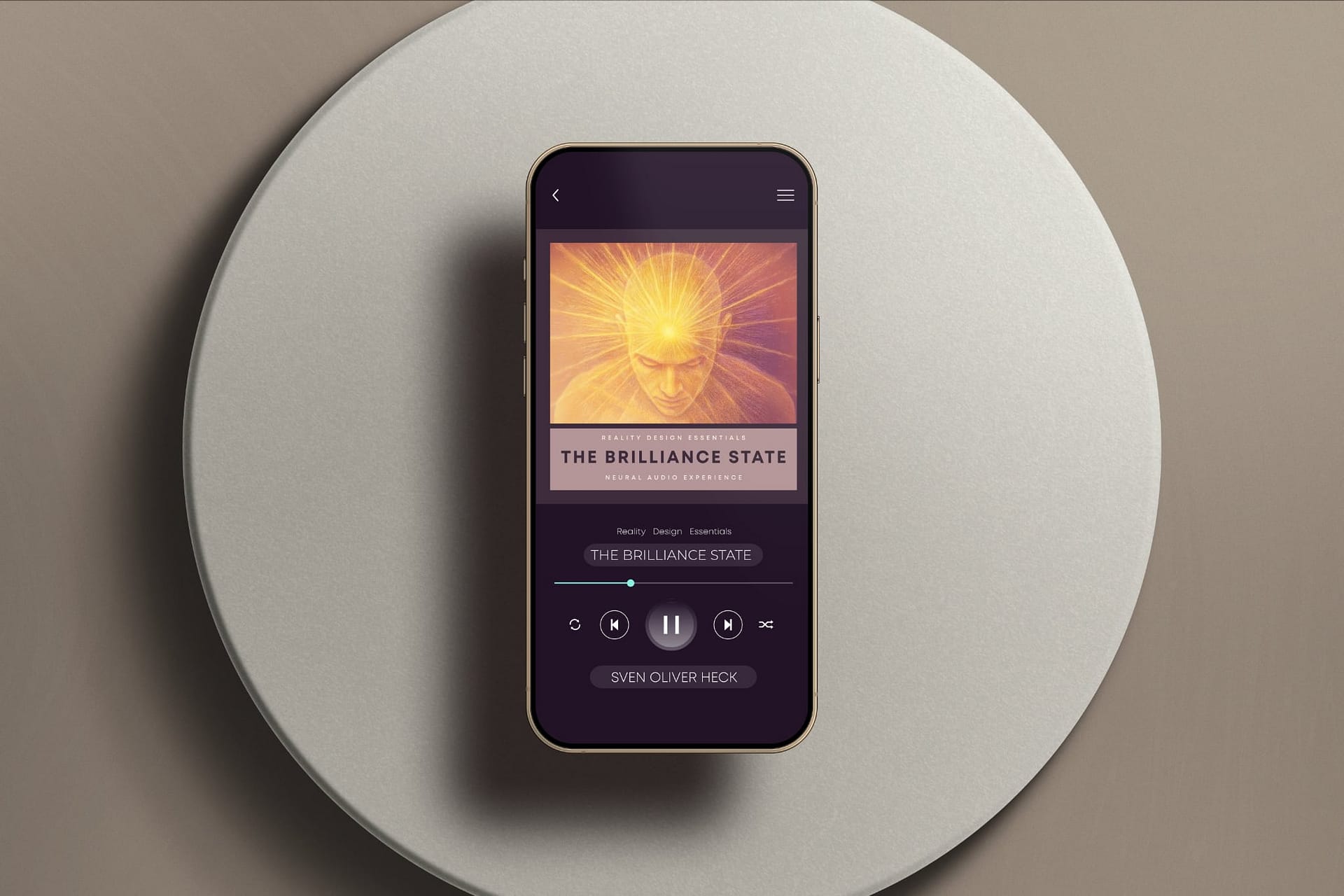
You'll get the session (guided audio with binaural beats), the Brilliance State session, and a short companion guide — all free.
Trying to become the best version of yourself can become exhausting when every effort begins with the belief that you’re not enough. Self-acceptance gives growth a different foundation: you can…
When your life feels like it’s falling apart, a personal crisis may call for feeling what you’ve been avoiding rather than making another plan. Care for the basics, and let…
I’m in an in-between phase, my identity shifting from the old to the new. Knowing a great deal about human development hasn’t kept me out of the troubling aspects of…
AI can help you understand yourself, but it can’t provide the experience that changes you. Reflection, explanation, and insight can support personal growth; lived experience is the part you still…
I used to lead workshops for leadership teams and look entirely at ease. The work went well. People valued it. What they could not see was how much I was…
Your life can look good from the outside and still feel strangely far away from you. You may be healthy, productive, successful, surrounded by beauty, and yet something in you…
You can be successful, capable, loved, and still leave yourself out of your own life. A people pleaser may appear accomplished while quietly setting aside their own needs. I know…
You can be praised, respected, financially successful, and still feel strangely absent from your own life. You may not have lost your authentic self but you may have buried it…
The Breakthrough Method 70,000+ Listeners Have Used to Shift Into Inner Clarity in 12 Minutes
A 12-minute guided session that clears the mental noise keeping your mind below its natural capacity — so the sharp, focused presence that was always there comes through. The shift from thinking harder to thinking clearer.
You'll get this session (guided practice with binaural audio), the Beyond Fear session, and a short companion guide — all free.
This website uses cookies to improve your experience. We'll assume you're ok with this, but you can opt-out if you wish.
Cookies are small text files that can be used by websites to make a user's experience more efficient. The law states that we can store cookies on your device if they are strictly necessary for the operation of this site. For all other types of cookies we need your permission. This site uses different types of cookies. Some cookies are placed by third party services that appear on our pages.
For more information on how Google's third party cookies operate and handle your data, see:
Google's Privacy Policy
Necessary cookies help make a website usable by enabling basic functions like page navigation and access to secure areas of the website. The website cannot function properly without these cookies.
Marketing cookies are used to track visitors across websites. The intention is to display ads that are relevant and engaging for the individual user and thereby more valuable for publishers and third party advertisers.
Preference cookies enable a website to remember information that changes the way the website behaves or looks, like your preferred language or the region that you are in.