Can AI Help You Understand Yourself? The Limit of AI for Personal Growth
AI can help you understand yourself, but it can’t provide the experience that changes you. Reflection, explanation, and insight can support personal growth; lived experience is the part you still have to meet yourself.
I use AI every day, including to explore my own inner patterns. What matters is where it enters the process: for me, the experience comes first, and the research follows. That distinction became tangible when something I had understood for years suddenly came forward inside me.
Key Takeaways
AI can help you reflect, research ideas, and recognize patterns, but it can’t live through an experience for you.
Experience comes first and research follows. Journaling can help capture what you felt before interpreting it.
Personal change becomes tangible when insight affects your responses, relationships, and actions, not just what you understand intellectually.
You don’t have to process every emotion or face overwhelming experiences alone. A trusted guide or mental health professional can offer support.
Understanding a concept vs. experiencing it
As a coach, I’m interested in how the psyche develops, how consciousness works, and what makes transformation possible. I’ve read classic literature and scientific material because I wanted to understand who I am, how I function, and how to live well.
One concept I knew was suppression. When something feels too painful or difficult to bear, a part of us tries to protect us by pushing intense emotions out of awareness. That protection can make the experience easier to bear.
I understood the idea. I could also recognize it when working with other people.
What Came Forward When I Didn’t Know What to Do
During a period of personal crisis, I reached a point where I didn’t know what to do next. In the stillness of being unable to take the next step, emotions and thoughts began to emerge that I hadn’t been aware of.
This was an intense experience. I could feel what had been suppressed.
Part of it was unpleasant. Another part of me was amazed: this is how suppression works. This is how it feels when something that has been held out of awareness becomes available again.
I couldn’t say with certainty why it emerged then. Perhaps I was ready to see it. Perhaps I had enough stability. Perhaps it mattered for an important move in my life.
What I knew was that my understanding now included an experience I hadn’t had before.
Ergriffenheit: When an Experience Takes Hold of You
The German term Ergriffenheit helps me describe this. I use it for the way an experience, feeling, sensation, or inner movement can capture you and draw you in.
You know something through your participation in it. You feel it, sense it, and go through it.
This is where I see profound transformation taking place. Intellectual understanding remains useful, but it reaches only one part of us. An immersive experience can involve much more of who we are.
Being taken into an experience isn’t always a conscious choice. Sometimes something emerges when we are ready, when the circumstances allow it, and when we are no longer protecting ourselves from encountering it.
That doesn’t mean we can manufacture the right moment. In my own experience, the pause in which I couldn’t find the next step became the space where previously hidden material could appear.
When a Relationship Conflict Carries an Older Feeling
A client of mine experienced intense hopelessness, neglect, and loneliness during relationship conflicts. He understood the disagreement. He could recognize the dynamic and even understand why the other person said or did what they did.
Yet his emotional response was far stronger than the immediate situation seemed to explain.
He was a grown man running a company with many employees. During certain conflicts, though, he was drawn into a very different inner experience.
What emerged in a therapy session was an experience of being a small child, alone in a garden. He was crying and calling for a parent or caretaker, but nobody came. There was fear, loneliness, and the feeling that nobody cared or would rescue him.
This kind of inner material doesn’t have to be a literal memory. It can appear through images, feelings, and sensations. For him, the emotional experience was vivid, and adult conflict could pull him back into it.
What Changed Through Our Work
We worked with the pattern emotionally, energetically, and somatically, at the level of experience.
Afterward, difficult conversations and relationship situations still happened. He could sense something of the old reaction beginning to stir, but he could respond differently.
The change became visible when he could enter another difficult conversation without being pulled into the same response.
Understanding that he might once have felt abandoned was only part of the process. Working with the experience itself changed how he met the next situation.
How I Use AI for Personal Growth and Self-Reflection
I’m not against AI. I use it for many things, and I find it valuable for reflection and understanding patterns inside me.
But the order matters.
Experience First
When something in me asks for attention, I go through the experience. I feel it. I sense it. Sometimes I struggle with it.
At times, I enter that process intentionally. At other times, I’m pulled into it. This is the quality of Ergriffenheit: something takes hold of me, and I find myself involved in an inner movement.
The experience has its own reality before I have a complete explanation for it.
Before opening an AI chat, you could use journaling to capture what you felt. A learning journal or a couple of journaling prompts can help preserve the experience before you interpret it.
Research Afterward
Afterward, I may describe what happened in an AI chat.
Because I’m interested in the development of the human psyche and in living a good life, I often have ideas about what an experience might connect to. I know different writers, philosophers, mystics, sages, and scriptures. AI helps me explore those connections across books, traditions, and periods of thought.
It feels like having access to a large library in a moment. I can bring together theories and approaches that wouldn’t naturally sit beside each other, then relate them to my own life.
That is where I find the technology beautiful.
An experience may be complex or overwhelming. Research afterward can help me make sense of it, recognize connections, and understand it more fully. An AI coach can suggest questions and connect ideas, but it can’t feel or live through the material for me. The experience remains my own.
Transformation Has to Reach Your Life
My five-pillar Inside Success transformation framework includes healing, envisioning, expanding yourself and your identity, and going into action. These aspects matter because change has to become real in the way you live.
You can understand an idea in your head and still find yourself caught in the same emotional response. My client’s experience made the distinction clear: his understanding was already there. The change became tangible when a difficult situation no longer drew him into the same pattern.
Transformation can involve the physical, somatic, emotional, mental, energetic, and perhaps spiritual dimensions of your experience. Bringing these together can create a sense of becoming more whole.
More yourself.
There can be a recognition that you are coming home to something in you. That recognition has to be experienced, and its meaning has to reach daily life.
This is also why an intense experience alone isn’t the whole journey. Personal development takes shape when insight becomes part of your relationships, responses, and actions. Insight gains substance when you can live differently.
See Where You Stand and Find Your Next Move
It isn’t always easy to recognize where you are in a transformation process. You may understand a great deal about yourself and still be unsure what needs attention next.
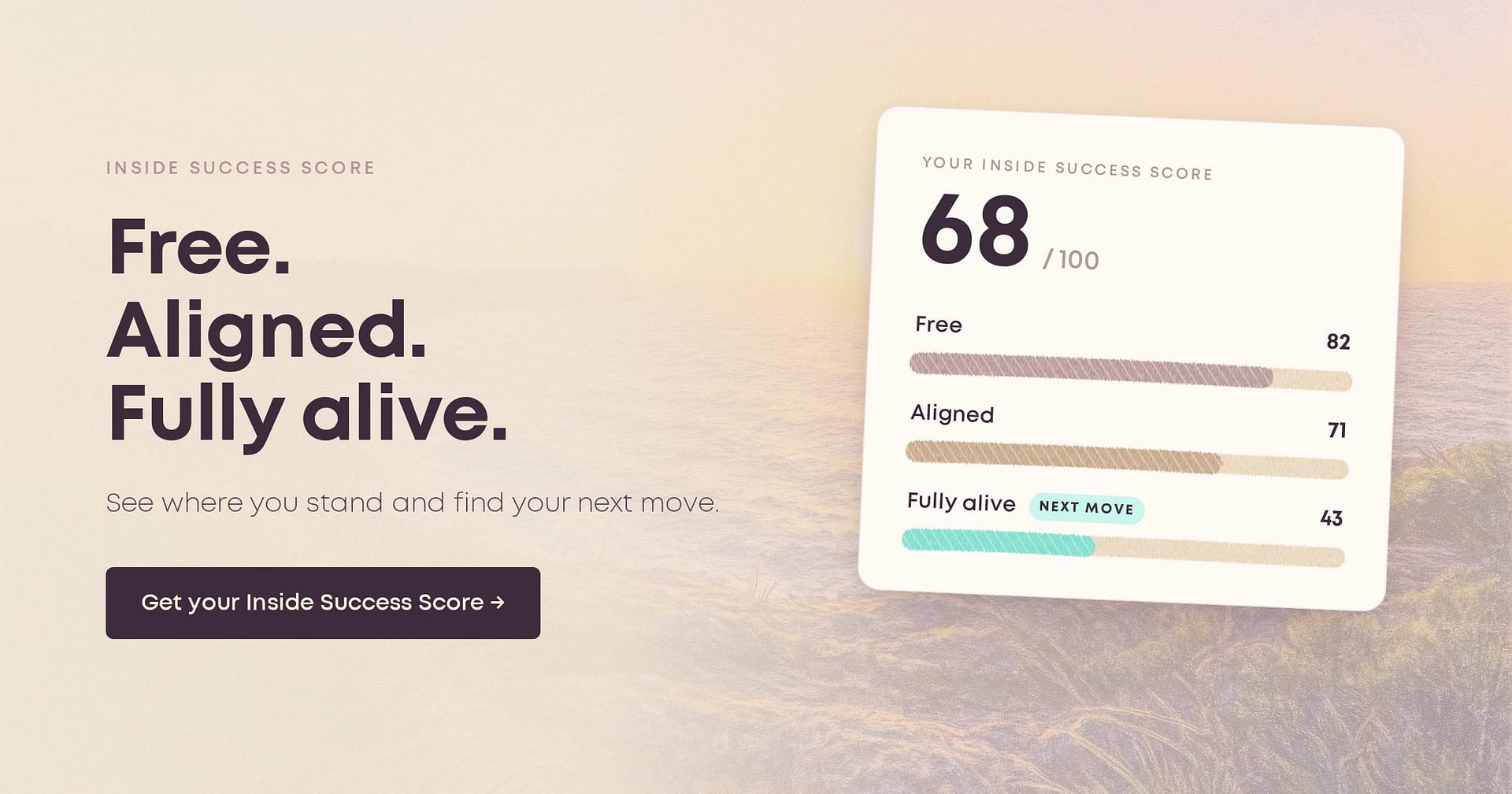
I created the free Inside Success Self-Assessment to help you see where you stand and identify your next important move. If you already have goals, use the assessment to identify which next move matters most. That makes goal setting a way to orient yourself, not a substitute for the experience itself.
It asks a short series of questions and includes practical exercises and personalized guidance to support what comes next. It offers a way to orient yourself within your own process, with something concrete to work with beyond another explanation.
Questions About AI and Inner Change
Does this mean I need to process every emotion?
No. Being available to your experience doesn’t require turning every passing mood into an extended inner project.
You can acknowledge a feeling without assuming it tells the whole truth about your present situation. Some recurring emotions deserve care and attention. Other states pass without needing prolonged analysis. The distinction is awareness and discernment, rather than pushing a feeling away or giving it automatic authority.
What if an experience feels too overwhelming to meet alone?
Some inner experiences are difficult to hold without support. A trusted guide or an appropriate mental health professional can offer steadiness when painful material emerges.
AI may help you describe or reflect on what is happening, but it doesn’t replace appropriate care. There is no requirement to face everything alone or to force yourself into an experience before you are ready.
The Experience Is Yours
AI can help you reflect, research, and connect ideas. The part it cannot do for you is the encounter with life through which those ideas become real.
That is the distinction I keep returning to in my own process: experience first, understanding afterward. The insight can enrich what happened, but you are the one who has to live it.
For individual support in that process, Work with me.
I'm Sven. I work with introspective entrepreneurs who've built real success on the outside and lost themselves on the inside.
People who sense the next chapter isn't about achieving more, but about becoming themselves again.
Not through performance. Not through another framework.
By coming back to the source, and living your life from there.
The Breakthrough Method 90,000 Listeners Have Used to Shift Into Inner Freedom in 20 Minutes
A 20-minute guided session that moves you out of fear-based reactions and self-doubt into steady, grounded power — so you respond from choice instead of reflex.
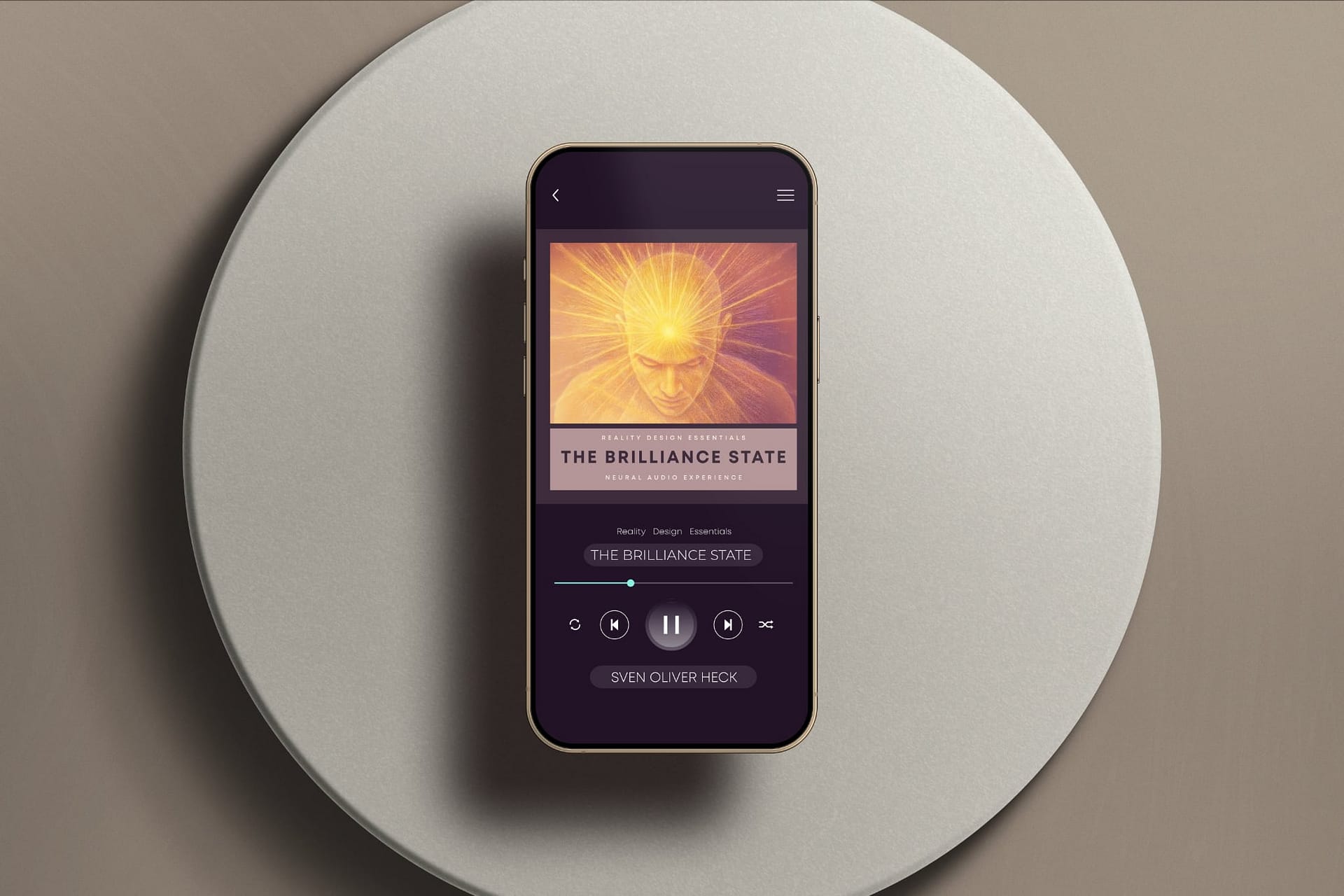
You'll get the session (guided audio with binaural beats), the Brilliance State session, and a short companion guide — all free.
Trying to become the best version of yourself can become exhausting when every effort begins with the belief that you’re not enough. Self-acceptance gives growth a different foundation: you can…
When your life feels like it’s falling apart, a personal crisis may call for feeling what you’ve been avoiding rather than making another plan. Care for the basics, and let…
I’m in an in-between phase, my identity shifting from the old to the new. Knowing a great deal about human development hasn’t kept me out of the troubling aspects of…
AI can help you understand yourself, but it can’t provide the experience that changes you. Reflection, explanation, and insight can support personal growth; lived experience is the part you still…
I used to lead workshops for leadership teams and look entirely at ease. The work went well. People valued it. What they could not see was how much I was…
Your life can look good from the outside and still feel strangely far away from you. You may be healthy, productive, successful, surrounded by beauty, and yet something in you…
You can be successful, capable, loved, and still leave yourself out of your own life. A people pleaser may appear accomplished while quietly setting aside their own needs. I know…
You can be praised, respected, financially successful, and still feel strangely absent from your own life. You may not have lost your authentic self but you may have buried it…
The Breakthrough Method 70,000+ Listeners Have Used to Shift Into Inner Clarity in 12 Minutes
A 12-minute guided session that clears the mental noise keeping your mind below its natural capacity — so the sharp, focused presence that was always there comes through. The shift from thinking harder to thinking clearer.
You'll get this session (guided practice with binaural audio), the Beyond Fear session, and a short companion guide — all free.
This website uses cookies to improve your experience. We'll assume you're ok with this, but you can opt-out if you wish.
Cookies are small text files that can be used by websites to make a user's experience more efficient. The law states that we can store cookies on your device if they are strictly necessary for the operation of this site. For all other types of cookies we need your permission. This site uses different types of cookies. Some cookies are placed by third party services that appear on our pages.
For more information on how Google's third party cookies operate and handle your data, see:
Google's Privacy Policy
Necessary cookies help make a website usable by enabling basic functions like page navigation and access to secure areas of the website. The website cannot function properly without these cookies.
Marketing cookies are used to track visitors across websites. The intention is to display ads that are relevant and engaging for the individual user and thereby more valuable for publishers and third party advertisers.
Preference cookies enable a website to remember information that changes the way the website behaves or looks, like your preferred language or the region that you are in.