What to Do After a Breakthrough So It Actually Sticks
You can lose a breakthrough in a single conversation. A moment opens, your heart softens, and you see the world through new eyes, but then you explain it too soon.…
You can spend years learning how to process your emotions and still feel more drained than free. This is the struggle of achieving mastery over your inner world without yet having achieved true emotional sovereignty.
If you’re smart, sensitive, and used to performing at a high level, emotional work can quietly become another form of overwork. While many such achievers have high EQ, they often lack true internal awareness because their efforts are directed outward. You journal, process, reflect, and try to get it right, yet inner peace keeps moving further away.
This is where a different posture becomes necessary, one built on discernment, presence, and emotional sovereignty rather than endless self-analysis.
Some people don’t only feel their own inner world. They also feel the emotions in the room.
You may notice tension before anyone says a word. You may sense what sits under a conversation, behind a smile, or inside a partnership that looks different from the outside. That depth can be a gift. However, without the right framework, it becomes exhausting and leads to chronic stress.
I know this pattern well. I spent years sitting down and working through my emotions, and for a long time it felt like a waste of time and energy. Not because emotions don’t matter, but because of how I approached them. I kept trying to solve emotional discomfort through more attention, more thinking, more processing. Constant over-processing like this keeps the nervous system in a state of survival mode. For a high-achieving mind, that can become a trap.
Sensitive, accomplished people often do what good people do. They try to be responsible with their inner life. So they go to therapy. They go to coaching. They talk about feelings. They write everything down. They try to integrate every reaction, every mood, every shift. Men’s emotions are frequently handled with this performance-based mindset, leading to burnout.
And yet, all of this processing is exhausting.
The trap is subtle. What starts as healing turns into obsession. What starts as emotional intelligence becomes self-surveillance. Emotional intelligence is the skill of noticing inner shifts without over-identifying with them. You become highly informed about your emotional life, but no more peaceful inside it.
This is why emotional sovereignty matters. Not emotional perfection. Not endless emotional optimization. Real emotional sovereignty means you can notice what’s happening inside you without being ruled by it. In the language of consciousness-based work, being must come before doing. When you lose that order, even healing becomes another performance.
For depth-driven leaders, entrepreneurs, and highly sensitive achievers, this shift is not small. It changes everything. You stop trying to fix yourself into peace. Instead, you learn to stand in a calmer, clearer relationship with your inner world.
A lot of standard emotional advice says you should sit with your feelings, often summed up as “feeling your feelings.” Sometimes that is wise. Sometimes it is necessary. Trauma, grief, and deep pain often need careful attention.
Still, that advice can become harmful when it turns into a rule for every passing emotional state. The push to always feel everything deeply can lead to over-analysis, which ironically results in suppressing emotions under layers of mental effort.
I learned this through my own life. I would wake up after a perfectly normal day and feel off for no clear reason. There would be a strange sensation in my body, a subtle mood, a heaviness that didn’t make sense. Then my mind would kick in. What’s wrong with me? What happened? How do I fix it?
So I would journal. I would reflect. I would search for the hidden cause. While journaling is a tool, it can sometimes fuel the cycle of over-processing if not used with a specific intent.
Two hours later, I felt worse.
The emotion was still there, and now I was mentally drained too. My high-achieving brain had turned a passing state into a full internal project. Many sensitive people do this without realizing it. They assume every mood carries a message. They assume every inner shift needs interpretation.
It doesn’t. Emotional sovereignty is not about trying to control your emotions. It is about discernment. That is not the same as avoidance. It is not bypassing or suppressing. It is learning that not every emotional wave deserves your full attention.

The first shift is simple, but it can feel radical when you’ve spent years trying to do emotional work the right way.
You do not have to sit and feel all of your emotions all the time.
That sentence gives many people immediate relief. It breaks the spell. It loosens the belief that maturity means constant emotional excavation.
For smart and sensitive people, over-processing often becomes a loop. You feel something uncomfortable, then you study it, then you judge yourself for having it, then you feel more stress because now there is more to fix. The original emotion may have been small, but your relationship to it makes it bigger.
A better approach starts with discernment. Some emotions need to be met. Others need space. Still others need to pass without ceremony.
This is why so many accomplished people stay stuck even after years of inner work. They become more aware, but not more free. They have more language for their pain, but less room around it. In other words, awareness without discernment can deepen the trap.
Emotional clarity asks for something else. It asks you to stop treating every internal movement as a call to action. It asks you to trust that peace does not come from processing harder. It comes from a steadier inner posture.
Emotional maturity is not feeling everything more intensely. It is knowing what deserves your attention and what does not.
When you make this shift, your nervous system gets a break. Your mind gets quieter. Most of all, you begin to feel that your inner world is something you can relate to wisely, not something that owns you.
The second shift changes how you see emotions in the first place.
Instead of treating them only as stories, causes, or problems, start seeing them as states. They are forms of energy moving through your system. That does not make them less real. It makes them easier to work with.
Often, emotions don’t arrive as clean labels. You do not always wake up and say, “I am angry.” More often, something slips in. A low mood. Irritation. Restlessness. Numbness. A strange pressure. You feel less available, less open, less grounded, and you don’t quite know why.
When you begin to read your inner life as energy, more clarity appears.
Here is a simple way to think about it:
This matters because high energy is not always good, and low energy is not always bad. Calm and rest are low-energy states, but they can be deeply supportive. Meanwhile, anger and frantic overstimulation may feel powerful, yet they often reduce your range and clarity.
Biologically, these states often stem from the limbic system triggering reactive toddler brain moments. The goal is not to control every state. The goal is to recognize what is happening, so you stop collapsing into it. Engaging your prefrontal cortex lets you objectify emotions rather than being consumed by them.
Once you can notice a state, the next step is to name it.
That small act can create a surprising amount of space.
Instead of saying, “I am angry,” you can say, “Anger is moving through me.” Instead of, “I am a mess,” you can say, “I am in a contracted state right now.” That language matters because identity creates fusion. State language creates room.

For example, imagine coming home after a long, heavy workday. You walk into the kitchen and snap at your partner. The old pattern says, “I’m terrible. Why am I like this?” A more mature pattern says, “Something is happening in me right now. I see it. I don’t want to act from it.”
That doesn’t mean you can stop on command. Sometimes you still react. However, once you notice the state, it stops possessing you so completely.
You may even say, “I’m sorry. I’m not in a good place right now. I need a moment alone.”
That is not weakness. That is awareness with responsibility.
In time, this gives you a wider gap between impulse and action. You still feel what you feel. Yet you gain space. You gain time. You gain the power to respond, rather than simply discharge whatever moved through you first.
This shift also fits a deeper truth. You are not your passing states. Your deeper nature is larger than the emotion of the moment. When you reconnect with that inner center, which some call Source, essential nature, or the true Self, emotions stop defining the whole field of who you are.
Even with practice, triggers still happen.
You may snap. You may withdraw. You may lose perspective for a while. That does not mean the work failed. It means you are human.
For me, one of the hardest parts was not only the emotional state itself, but the self-judgment that came after it. I would feel off, then I would become hard on myself for feeling off. So there were two layers of stress. First the mood, then the punishment.
That second layer is often the crueler one.
If you want emotional sovereignty, self-compassion has to come first. Not as a slogan, but as a real practice. Attacking yourself during emotional lows is counterproductive because it ignores your inherent worth.
That can sound as simple as this: “Something difficult is here. I don’t need to attack myself for it.”
This is where many high performers struggle. They can extend patience to teams, clients, children, and partners. Yet inwardly they become harsh, demanding, and cold. That inner pressure does not produce healing. It only creates more noise.
The first task in a hard emotional state is not self-correction. It is self-care.
When you become a better friend to yourself, the whole emotional system softens. Then clarity has a chance to return.
Some states do need direct support.
Fear, rage, and deep frustration can feel too strong to simply observe from a distance. In those moments, a guided tool can help you shift your state without getting lost in it.
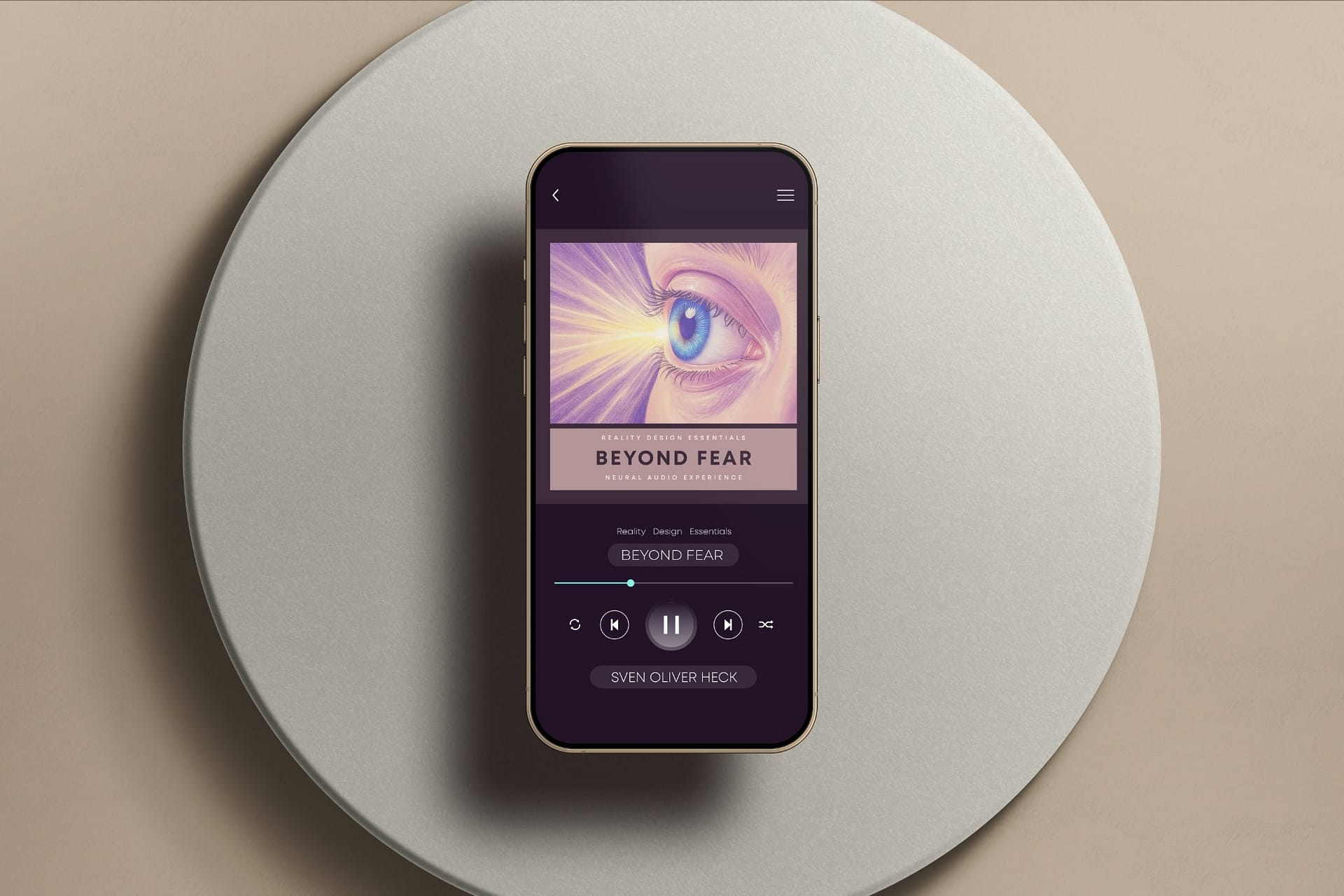
That is why I created the Beyond Fear Meditation. It is designed to help with difficult emotional states through visualization and nervous system support, rewiring your nervous system to hold intensity when fear or rage arises. More than 70,000 people have used it on Insight Timer, and the response has been strong because it gives people a practical way to move through intensity.

What makes this useful is the orientation behind it. The point is not to sit in distress forever and call that healing. The point is to work with your state in a way that supports clarity, calm, and agency, while maintaining mental health as a high-functioning individual.
For sensitive high achievers, this matters. You do not need more emotional drama. You need methods that restore inner authority and reinforce your nervous system.
If a difficult wave hits, the free Beyond Fear Meditation is a strong place to begin.
This final shift may be the most liberating of all.
After years of therapy, coaching, meditation, exercise, and self-study, I noticed something important. Some strange moods still appeared for no clear reason. Little reactions. Sudden heaviness. Emotional static. These states did not always trace back to trauma, conflict, or some unmet need.
Some of them were simply distortions.
A distortion is an emotional signal that does not carry useful truth. It has no real depth to process. It does not point to a meaningful issue. It only drains attention, energy, and presence. A false emotional response like this can even negatively impact physical health and disrupt the focus needed for deep work.
The best image for this is a mosquito.
A mosquito lands, irritates you, and pulls your energy toward it. If you build your whole day around it, the mosquito wins. Many sensitive people do this with emotional distortions. They feel the bite, then create a story, then spend hours trying to heal something that never needed healing.
Discernment begins with one honest check.
Does this feeling carry meaningful information, or is it simply noise?
That takes presence. It takes practice. And it takes a willingness to stop assuming that every difficult emotion is sacred.

Photo by Pixabay
For example, you wake up in a strange state. You move your body. You get sunlight. You do what usually helps. Yet some low-grade emotional heaviness still hangs around. At that point, rather than spiraling into analysis, you can take a different stance.
You can say, “No. I do not give my consent to this.”
That is not denial. It is inner authority.
You are not pretending to feel great. You are refusing to build a relationship with a state that has no truth in it. You are refusing to feed it with time, story, and identification.
This matters far beyond mood management. In a consciousness-based life, where you design from a deeper inner center instead of from egoic over-effort, discernment becomes essential. Not every inner event deserves leadership over your day. Not every feeling should direct your choices. Presence includes the power to decline what is false. Your empowered self exercises emotional sovereignty here by choosing which signals to follow and which to drop.
For many empathic, intelligent people, this creates immediate relief. They realize they do not have to integrate nonsense. They do not have to turn every cloud into a personal crisis.
Sometimes the distortion drops in minutes. Sometimes it takes more practice. Over time, though, you build stamina. The state may still appear, but it no longer takes over.
Here is a useful rule.
The emotions that need real attention tend to stay. They return with weight, clarity, and signal. They ask for care, truth, and action. Those may belong in therapy, coaching, reflection, or honest conversation.
Distortions behave differently. They fade when you stop feeding them.
So the goal is not suppression. The goal is profound emotional sovereignty.
You learn what to meet.
You learn what to move.
You learn what to drop.
If you’ve built a successful life and still feel emotionally overrun, the answer may not be more processing.
It may be a better relationship with your inner world. One built on discernment, compassion, and a deeper connection to your own center. This is where lasting fulfillment begins, not by optimizing every feeling, but by returning to the place in you that is larger than the feeling.
That is the deeper promise here. Not less depth. Better depth. Not emotional avoidance. Emotional clarity. Emotional sovereignty builds long-term emotional resilience, helping you find peace from a place of high self-value, where you no longer feel the need to perform emotional labor for every passing mood.
If this speaks to where you are, and you want support in building that kind of inner authority, you can work with me here.
No. The point is not to ignore emotions. The point is to stop giving equal weight to every emotional state.
Some feelings carry truth and need care. Others are passing distortions, stress states, or borrowed noise. Emotional maturity means learning the difference.
A useful emotion usually has signal. It points to a real issue, stays present, and asks for an honest response.
A distortion often feels strange, ungrounded, or out of proportion. It may appear suddenly without a clear cause and lose force when you stop feeding it with attention.
No. Suppression pushes emotion down and pretends it is not there.
This approach starts with awareness. You notice the state, name it, and stay present. Then you decide whether it needs care or whether it should be released.
Emotional stoicism typically means suppressing emotions or maintaining a cold detachment to tough it out.
Emotional sovereignty is about presence, not suppression. You fully acknowledge the emotion, assess its validity, and respond wisely without forcing numbness or denial.
Because sensitivity picks up more data, both inside and outside. Add a high-achieving mind, and that sensitivity can turn into constant monitoring, interpreting, and fixing.
That combination creates exhaustion. You feel more, think more, and carry more than most people realize.
Yes. Therapy can be deeply helpful, especially for trauma, grief, and repeated patterns.
The point here is that not every mood needs deep processing. Some states need support, while others need discernment and release.
It looks like noticing a state before it runs your behavior. It looks like pausing before you snap, or recovering faster when you do.
It also looks like being kind to yourself, choosing not to identify with every passing mood, and keeping your day aligned with what matters most.
Emotional self-awareness helps you notice what is happening before it takes over. It gives you enough space to see the difference between a real signal and a passing state.
That awareness makes it easier to choose your response instead of reacting automatically.
Start with one change. Stop assuming every feeling needs a full investigation.
Name the state. Soften your self-talk. Then ask whether the feeling contains real information or whether it is only draining you. For a deeper look at how resentment and grief drive this kind of exhaustion, read Emotional Exhaustion: The Heavy Feeling No One Talks About If you want guided support for strong fear-based states, the Beyond Fear Meditation is a practical next step.