
Why You Feel So Isolated as a Highly Sensitive Entrepreneur
I used to lead workshops for leadership teams and look entirely at ease. The work went well. People valued it. What they could not see was how much I was…
You can be praised, respected, financially successful, and still feel strangely absent from your own life. You may not have lost your authentic self but you may have buried it beneath a version of you that became very good at performing.
I know this pattern because I have lived it, and because I work with people whose outer lives look complete while something inside says, “This can’t be all of me.” The work isn’t to get rid of the capable, polished version of you. It is to recognize when that version has taken over your identity and stolen the space for a more authentic life.
There is a particular kind of exhaustion that success does not fix.
You perform well. People thank you. You get the result. Yet their praise doesn’t land. You go home, close the door, and feel hollow rather than fulfilled.
You didn’t build a life. You built a persona that became too good at performing.
The problem is rarely that you have no success. The problem is that success may have rewarded a narrow version of you for so long that you no longer know how to access the rest.
Over time, limiting beliefs can make achievement feel like the safest, or only, route to acceptance.
You keep moving forward because the role works. It gives you money, status, safety, approval, perhaps even admiration. When other parts of your identity have been neglected, achievement can become your main source of self worth.
But underneath, there can be a longing for something more real, more spacious, more like you.
Carl Jung used the word “persona” for the social face we present to the world. The word comes from the masks used in theater. As the International Association for Analytical Psychology explains, the persona is a system of relationship between individual consciousness and society.
It is not fake by definition. It is not a flaw.
You did not wake up one day and decide to hide yourself.
The persona develops because life asks something of you. As a child, you may cry, laugh, want things, protest, create noise, and show your feelings without much editing. Then school begins. You learn social conformity, sitting still, following instructions, managing your expression, and meeting expectations.
Later, university, work, relationships, and responsibility ask for new capacities. You learn to be professional. You learn to lead a room. You learn to be composed when pressure rises.
The persona can help you:
None of this is wrong. A mask can be useful. It can even be fun to enter a room, feel the energy there, and allow a certain version of yourself to come alive.
The trouble begins when you forget it is a role.
You can use a persona without being used by it.
When your persona is integrated, you can step into your professional role when it is needed. You can be clear, focused, capable, and decisive. Then you can come home, soften, feel, and be available to the people you love. The role supports your authentic expression instead of replacing it.
When you are identified with the persona, the role feels like all you are. Without it, you feel unstable. You may not know who you are when the job ends, the children leave home, the relationship changes, or the recognition fades.
That is where the question becomes more personal: Who am I when I am not performing the version of me?
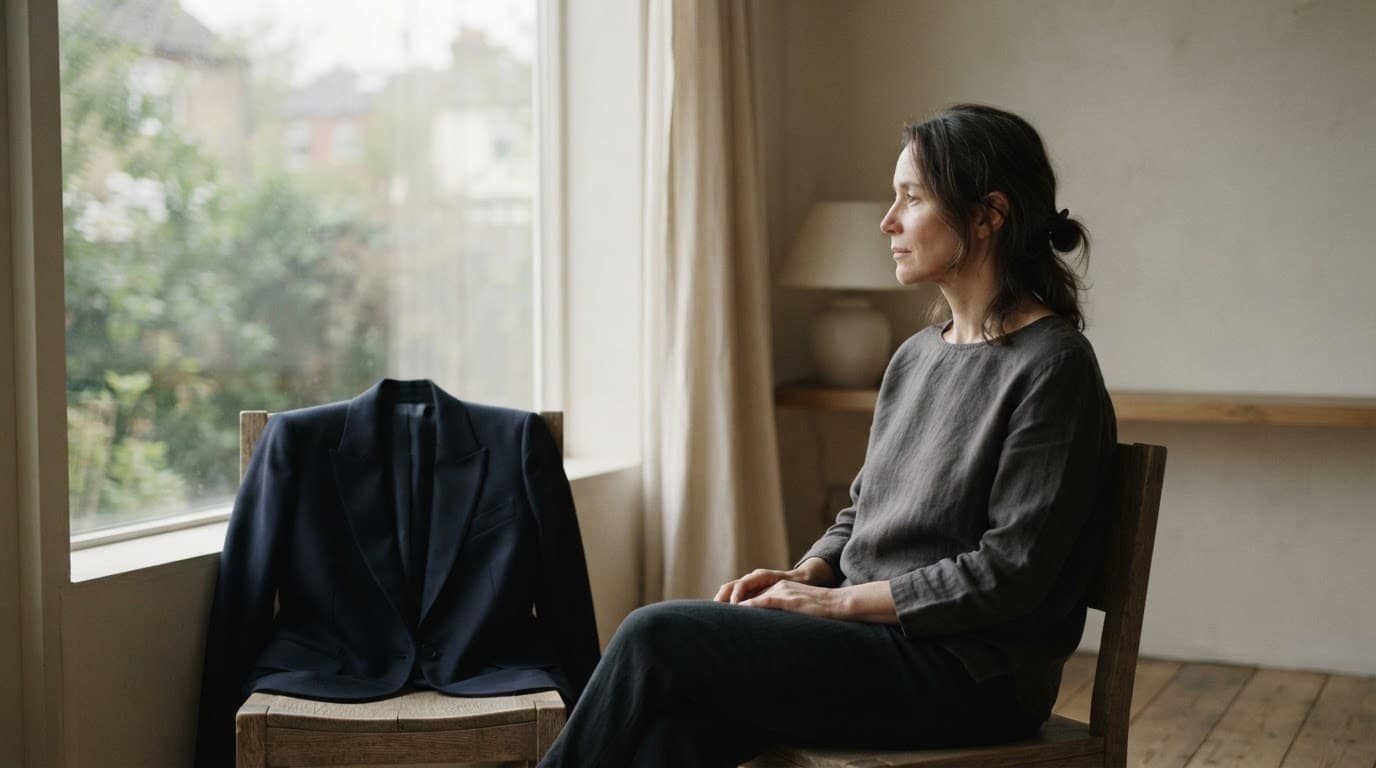
The persona is built through repetition.
You do something well. People respond positively. You receive praise, money, influence, or a sense of belonging. The role feels safer each time you perform it. Eventually, you begin to think, “This is me.”
You say, “I am a leader.” “I am the high performer.” “I am the one who holds it together.” “I am a mother.” “I am the creative one.”
These descriptions may be true. But they can also carry limiting beliefs about what you’re allowed to want, feel, or become. They are never the whole truth.
Imagine someone who has worked in the same role for 20 years. Then they lose the job and collapse into confusion. They don’t only miss the income. They may confuse their former function with their true identity.
The same thing can happen when children leave home. For years, being a mother may have held structure, meaning, and identity. Then the role changes. A difficult question appears: “What is left of me now?”
This is why life transitions can feel so intense. You may outgrow a limited version of yourself before you know what comes next. That uncertainty can be part of personal growth, not proof of failure.
Some people react by buying the motorcycle, starting the affair, changing careers overnight, or reaching for a dramatic new identity. The impulse underneath can be genuine: a desire to find the authentic self beneath the old roles.
But a new identity can become another mask if you don’t stop and listen.
The gap between who you present and who you experience yourself to be has a cost.
Most people don’t first notice it as a clear thought. They feel it as strain, exhaustion, boredom, annoyance, or frustration. A low sadness may appear without an obvious cause.
Ongoing disconnection from your real self can affect your emotional health, even when everything looks successful from the outside.
You can be succeeding outwardly while inwardly feeling disconnected.
Watch the situations where your body tightens.
Perhaps you are at dinner with people you don’t know. You smile, talk, explain yourself, and try to fit in. Yet your body feels cramped. You aren’t relaxed. Something feels awkward, closed, or slightly false.
Or perhaps you enter a meeting and immediately become a polished version of yourself. You know what to say. You know how to be impressive. But you also know there’s more in you than what you’re showing.
That sensation matters.
It doesn’t mean your behavior is completely fake. Your persona contains real abilities and real parts of you. The signal is the feeling that something is off, that you’re showing only a narrow slice of who you are.
You may be overidentified with a persona when you often:
A limiting belief such as “I must always appear impressive” can keep the mask in place, even when it no longer serves you.
Look for behavioral patterns rather than treating each reaction as an isolated symptom. Overexplaining, hiding strain, or needing to collapse after being socially “on” can reveal how much effort you’re using to maintain the image.
The body can carry the truth before the mind has words for it. Tension, fatigue, irritability, headaches, and a need to collapse after being “on” aren’t always signs that you need to push harder.
Sometimes they’re signs that you’ve been performing too far away from yourself. Emotional awareness can help you notice what an interaction is telling you without treating every uncomfortable feeling as a crisis.
I have done a lot of business-to-business work, including facilitating workshops. I took some projects for money, fame, or the value of association, not genuine connection to the topic.
My professional persona was good at this.
I could prepare thoroughly. I could perform. I could manage the room. I could be the high performer, overachiever, and people pleaser who always delivered a good result.
People would say, “That was an amazing workshop. Thank you so much.” They were sincere. The workshop had gone well.
But I could not feel it.
Afterward, in the hotel, I often felt drained and empty. I had performed a narrow professional role, even though the role contained parts of who I am.
The work was competent, but it had left little capacity for connection afterward. Something about it still felt hollow.
That was an important realization for me.
The issue was not that I had become a complete fraud. I was relying on too little of myself. I could have led the same workshop while being more emotionally available, more open, and more honest about what was alive in me.
It would have been a different experience for me and, I believe, for the people in the room.
The professional version of me gave me safety. People listened. I knew how to manage the room. I felt sharp, fast, engaged, and creative.
Then came the collapse.
Two days of exhaustion. A migraine. No energy left for the people waiting at home.
The goal is not to give up what works. The goal is to balance it.
You don’t need to abandon your competence. You may need to stop treating competence as the only part of you that deserves to exist.
Success gives the persona evidence that it is doing the right thing.
You receive the promotion. The client signs. The team praises you. Your work brings status, income, and influence. These rewards make the identity behind your success difficult to question. Self doubt can feel almost irrational when the results seem to confirm who you are.
That is why successful people can stay in a role long after it has stopped feeling true. From the outside, the life appears to work. There may be no obvious reason to change anything.
Inside, another part of you may be asking for meaning, rest, emotional connection, creativity, or a different pace. Success can conflict with your core values even when your workplace rewards your performance.
The conflict can be painful. Your outer life keeps moving forward while your inner life is asking you to stop.
The hidden cost of continuing to perform can affect your emotional health. You may feel disconnected from yourself while everyone else sees progress.
Not every workplace makes this easy. Some environments punish uncertainty, openness, or vulnerability. You may have learned, through limiting beliefs, that showing more of yourself is dangerous.
That fear is understandable. The persona was built to protect you.
The business world is not the only place where people perform a persona.
A manager may feel pressure to appear confident and decisive. An artist may feel pressure to be eccentric, original, or constantly creative. A parent may believe they must always be patient. A founder may feel they have to be strong enough for everyone.
The mask changes with the room.
You may have one version of yourself at work, another with your family, another with friends. Having different expressions in different settings is part of being human. It can create tension between authentic self and belonging, without requiring you to reject every social role.
The problem begins when you cannot access your deeper self in any setting. Or when you cannot show more of yourself even when you want to.
The most emotionally mature leaders I have worked with understood the professional game but also stayed available in their authentic self. Their emotional intelligence helped them read the room without becoming inaccessible. They were not careless or overexposed.
Appropriate openness made room for authentic connection without requiring anyone to overshare. People around them had more room to become themselves too.

Behind the persona is what Jung called the shadow.
The shadow is not your evil side. It contains parts pushed out of awareness, including qualities that are beautiful, alive, and creative. Self acceptance means welcoming these disowned parts with curiosity, rather than judging them.
A child may cry loudly, want something intensely, or show a huge burst of energy. If they repeatedly hear, “Stop that. Sit still. Be quiet,” they may develop limiting beliefs about which qualities are acceptable.
Over time, they can suppress desire, creativity, emotional openness, sensitivity, strength, anger, or authentic expression.
The shadow is not everything bad about you. It may also hold the aliveness you were taught to hide.
You do not need to excavate every hidden part of yourself on day one.
Start by noticing the identities you play. Notice where you become stiff, guarded, overly capable, or disconnected. Notice when you say something to appear knowledgeable, even though you don’t know.
Then make a small adjustment. Next time, you might say, “I am not sure about that.” Or, “I feel a little uncomfortable saying this.”
That is how you become more real.
As you become more honest, shadow material often begins to show itself. You may see patterns you hadn’t recognized. You may notice how your behavior affects your relationships. You may find strengths and feelings you exiled because they didn’t fit your old image.
The first step is not a dramatic reinvention.
It is self awareness, noticing what happens before trying to change it.
You don’t need to quit your job, leave your relationship, or announce a new version of yourself. Start by noticing moments when you don’t feel like the full version of who you could be.
Choose one recent situation where you felt tense, awkward, drained, or as if you were trying too hard.
Ask yourself:
Give that role a simple name. It may be the expert, the high performer, the always-confident leader, the people pleaser, or the professional version of you.
Naming it creates distance. You begin to see that this role is something you do, not your authentic self.
Pay attention to the gaps.
Maybe your team loves you, but your partner experiences you as distant. Maybe you receive recognition all day and arrive home with nothing left. Maybe you are admired for your discipline while your body is asking for rest.
These mismatches aren’t proof that you’re failing. They’re useful information about which personal values a role may be neglecting.
Try writing about one of them. You can write, draw, paint, or give the different versions of you a shape in another way. The point is to bring something unconscious into view.
If your energy is disappearing into roles that no longer fit, the Personal Energy Audit can serve as an optional support for seeing where your energy goes during a normal week.
Being more yourself doesn’t mean telling everyone everything.
You don’t need to become completely open with strangers, clients, or people who haven’t earned your trust. The goal isn’t oversharing. The goal is having a choice.
Start with someone safe.
Admit that you don’t know something. Share a real feeling with a trusted friend. Say that a situation feels uncomfortable. Allow yourself to be a little less polished.
This may feel frightening at first because your persona was built for protection. Fear of honesty can also create self doubt about how others will respond.
It may reveal limiting beliefs, such as “showing more of myself will make me unsafe or less respected.” Safe experiences of openness give you a new reference point. You begin to learn that you can show more of yourself and remain safe.
If fear is the part that keeps you performing, the Beyond Fear Meditation is an optional place to sit with the tension underneath the busy surface.
Your authentic self does not always feel happy.
You can be more yourself and still feel sad, uncertain, angry, scared, or challenged. Authenticity is not permanent bliss. It is not a state where life suddenly becomes easy.
The better question is: “Does this feel aligned with my authentic self?”
For me, one of the clearest signs is a sense of inner peacefulness.
That does not mean everything is calm on the surface. It means there is coherence between what is happening inside and how you express yourself outside.
You may still have hard conversations. You may still be afraid. But you do not feel like you are fighting yourself while having them.
Authenticity may feel less like excitement and more like inner peace.
Many people notice this when they walk in nature. There is no room to manage, no audience to impress, no role to maintain. After a while, something softer and more direct can come forward.
You may recognize, “This feels more like me.”
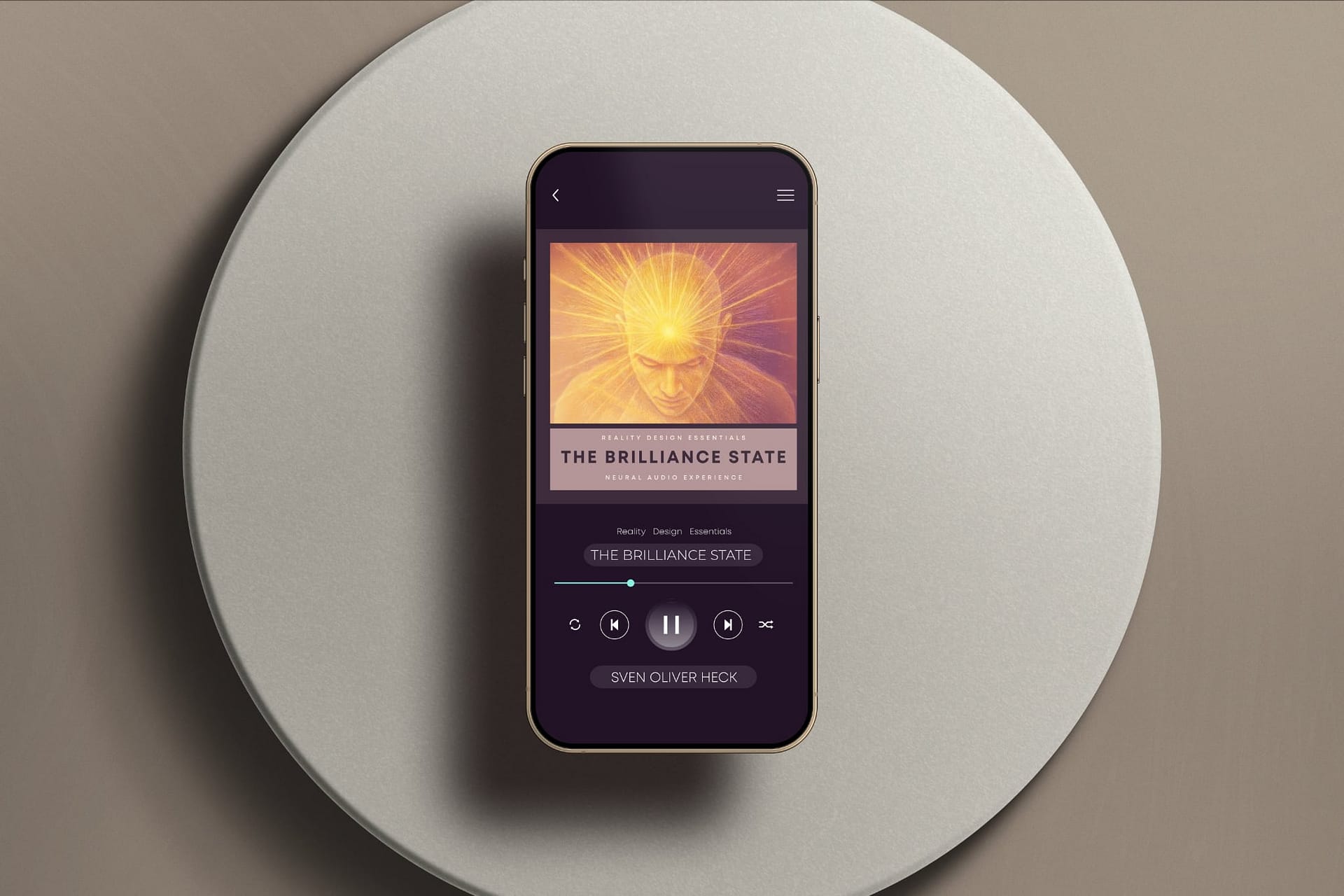
When your mind is noisy and scattered, The Brilliance State offers a short practice for quiet reflection and returning to a clearer, more centered place.
The persona has a function. It helps you show up in the world. It protects vulnerable parts of you. It supports your work, responsibilities, and relationships.
You don’t need to eliminate it.
You need to become conscious enough to choose when to use it, rather than performing automatically.
A professional can remain professional while becoming more emotionally available. A leader can stay decisive while acknowledging uncertainty. A creative person can keep creating without maintaining an exaggerated image.
An integrated persona becomes richer. It has more range. It no longer traps you in one narrow expression of yourself.
Use the mask when it serves you. Do not let it decide who you are.

Choose one moment from the past week when you felt unlike yourself.
Write a few honest lines about the situation:
Keep the exercise manageable. Don’t force an answer or judge what comes up.
Don’t build a new idealized identity around being authentic.
Stay curious.
You’re not trying to become someone else. You’re becoming more able to recognize the parts of you that were there before the performance took over.
If grief, regret, or emotional weight is part of what you’ve been carrying beneath the role, the Letting Go Practice offers space to meet what was pushed aside as part of a gradual healing process.
Your authentic self isn’t a perfect, fixed personality hidden somewhere inside you. It’s the experience of feeling coherent, even as your needs, roles, and circumstances change.
You can adapt to a situation, protect your privacy, and maintain clear boundaries. You can also feel ordinary uncertainty without abandoning yourself in the process.
No. The Jungian persona is a normal part of social life. It helps you meet expectations, protect vulnerabilities, and function in professional and personal roles.
It becomes difficult when it turns rigid, or when you identify with it so completely that other parts of yourself feel inaccessible.
Keep it playful. Don’t turn authenticity into another performance standard.
Notice whether you feel more peaceful and coherent, or whether you’re straining to become an impressive new version of yourself. If you’re constantly managing how “real” you appear, another persona may be forming.
Choose safe people and safe spaces. You don’t need to reveal your inner world to everyone, and privacy can be part of healthy boundaries.
Start with small honesty. Admit uncertainty, name discomfort, or share one real feeling with someone you trust. Being authentic isn’t about saying everything. It’s about being able to say what matters.
A major transition can bring the limits of an old identity into sharp focus. Career loss, illness, relationship changes, grief, ongoing exhaustion, or a strong identity crisis can make this work harder to hold alone.
Therapy or coaching can offer a structured, safer space to explore what’s happening and decide what support you need.
The version of you that built success isn’t the enemy. It got you here. It may have protected you when you needed protection.
But you are more than the role that receives the praise. Your authentic self begins to return when you notice the gap, listen to what your body is saying, and make room for more of you to be present.
For private support in that work, Work with me.