
Why You Feel So Isolated as a Highly Sensitive Entrepreneur
I used to lead workshops for leadership teams and look entirely at ease. The work went well. People valued it. What they could not see was how much I was…
Overthinking is a cycle of racing thoughts and constant second-guessing that drains your mental health. You can make progress, do everything “right,” and still end up back in the same place. The problem often isn’t a lack of effort. It’s that you’re trying to change from within the same identity that keeps recreating the pattern.
If you’ve been trying to learn how to stop overthinking, calm negative thought patterns, or break free from the feeling that you’re stuck in a loop, there is a clear place to start. You don’t need more pressure. You need more self-awareness.
I know this pattern well. While recording the video, I found myself doing take after take, as if the same moment kept repeating. That small frustration pointed to something much larger, because life can feel the same way.
You make progress. You gain insight. You shift a few habits. Then, at some point, you find yourself back at the start, carrying the same weight, replaying the same tension, and wondering why this keeps happening.
For some people, the loop shows up as overthinking. For others, it shows up as an emotional state that keeps returning, a familiar form of self-doubt, or racing thoughts circling endlessly. The outer details change, but the structure is often the same.
I’ve experienced this myself, even after 15 years as a licensed therapist and two decades of inner work. I’ve studied the psyche. I’ve worked with people extensively. Still, loops showed up again and again. That matters, because these patterns often contribute to anxiety and depression: insight alone does not free you.

Most of us live much of life on autopilot. We rely on habits, routines, and well-worn responses. That is normal. Yet when a loop forms inside that autopilot, it can feel like a private prison. You know better, but you still repeat the pattern. You want freedom, but the old momentum keeps pulling you back.
You’re not failing. You’re looping.
That distinction matters more than it seems, because shame keeps the loop alive. Clear seeing starts to loosen it.
The first shift is simple, but it has real power. You need to notice the loop and name it.
That may sound basic. It isn’t. When you consciously say, “I’m in a loop,” you create a small but important separation between you and the pattern. You are no longer fully fused with it. A part of you has already stepped back and become aware.
That awareness changes your position. The loop may still be running, but it doesn’t own the whole field anymore.
Many people miss this step because they move too fast into self-criticism. They notice the pattern, then immediately attack themselves for being there again. That response adds another layer of pain and makes it harder to see clearly.
A more useful response sounds different. It says: this is happening, I can see it, and I try to be self-compassionate instead of punishing myself.
That kind of recognition is not passive. It is the beginning of agency.
In my work, I often see accomplished people struggle here because they expect themselves to be beyond the loop already. They are used to solving things. They are used to performing well. So when the same negative thought patterns of self-doubt and second-guessing return, they assume they must have done something wrong.
Usually, that isn’t the issue. The deeper issue is that awareness has not yet become steady enough to interrupt the old identity running beneath the surface.
If you want to stop overthinking, start here. Name the repeating pattern without drama. Notice the emotional weather. See the story your mind keeps rehearsing. Watch the body tighten around it. This is what self-awareness looks like at the beginning. Simple. Honest. Clean.
There was a point when I felt trapped by certain loops. I remember thinking that I might stay in them for years. That feeling can become heavy, especially when you already know the tools, understand the mind, and still can’t seem to get free.
Then I recognized something that changed the whole frame. I would not leave the loop by doing more from the same level of consciousness that created it.
That is the turning point.
A loop is not only a behavior problem. It is an identity problem. It comes from the version of you that keeps perceiving, reacting, interpreting, and acting in the same way. So long as that identity stays in charge, the pattern has a home.
This is why a mindset shift often has limited reach, even with practices like cognitive reframing. It can help you feel better for a moment. It can give you language. It can create a useful interruption. Yet the deeper movement comes when your identity changes, because being always shapes doing.
The contrast becomes clearer here:
| When you’re looping | When you’re shifting identity |
|---|---|
| You try harder inside the same pattern | You step beyond the pattern that created it |
| You manage symptoms | You change the structure beneath them |
| You repeat familiar reactions | You respond from a more aware self |
| You chase progress | You become more aligned with truth |
At some point, I had to look at the version of myself that was creating the loop and say, with honesty, “This is not who I am at my core.” That was not denial. It was recognition.

When that shift begins, you stop trying to outwork the loop. You start outgrowing it. This is where change becomes more than performance. It becomes an expression of a truer self.
For high-performing leaders, this matters. You can have results, discipline, and sharp thinking, while still living from an identity that feels too small for who you are. Perfectionism often masks itself as problem-solving in these scenarios. That inner mismatch creates strain. It also creates repetition.
If identity shift is the breakthrough, self-awareness is the tool that makes it possible.
Over the last 20 years, this has been one of the clearest truths in my work. You cannot redesign what you cannot see. You cannot move beyond a loop if you are still unconsciously merged with the thoughts, emotions, and impulses that feed it.
So what is self-awareness in practice?
It is mindfulness in action, your capacity to notice what is happening inside you, in real time. That includes your thoughts, emotions, body signals, energy, assumptions, and reactions. It also includes your ability to discern which of those inner movements are true to you, and which are distortions, old conditioning, or inherited noise.
That discernment is where freedom starts.
When you develop self-awareness, you begin to catch the moment before the loop fully closes. You notice the familiar thought. You feel the pull of the old emotion. You sense the old identity trying to take the wheel. Because you can see it, you have more choice.

Photo by Atahan Demir
This is also where my methodology, Reality Design, comes in. Reality Design is a conscious way of redesigning the version of yourself you live from. It is not about pretending to be someone else. It is not about acting confident while feeling split inside. It is a process of creating the inner and outer conditions that help you move from a limited identity into a more awake, more aligned, more alive one.
For some readers, that may sound abstract. In real life, it is very concrete. You notice what drains your presence. You see the stories that keep you small. You build mindfulness practices that return you to clarity. You choose environments, rhythms, and decisions that support the person you know you are meant to live as.
This is where “what is self-awareness” stops being a concept and becomes a lived skill. And when that skill grows, it enhances your mental well-being because you are no longer treating every thought as truth.
Many people try to stop overthinking by arguing with their mind. They try to out-reason every fear, replace every thought, or stay productive enough to outrun the discomfort. Sometimes that helps for a day. Rarely does it create lasting peace.
Overthinking usually has deeper roots. Overthinking and worrying often peak at night, sparking rumination as the inner monologue spins through worst-case scenarios. It often reflects a looped identity that feels unsafe without constant mental control. In that state, thinking becomes a way to manage uncertainty, avoid feeling, and maintain a fragile sense of order.
That is why pressure rarely works. The mind tightens when it feels threatened. More force creates more contraction.
A better path is presence. When you bring steady awareness to a thought pattern, you stop feeding it blindly. Scheduling a short worry time offers one practical way to contain this without suppression. When you become more aligned with your true nature, you don’t need the same thought loop to protect you. This is how inner authority grows.
For many successful people, this is the hidden threshold. Their outer life is strong, but their inner life still runs on old mechanisms. The next level is not more optimization. The next level is a more conscious way of being.
That is also why self-awareness matters beyond emotional relief. It supports better decisions, cleaner relationships, stronger boundaries, and a more stable sense of self. In other words, it creates the conditions for what I call inside success, a life where outer achievement and inner fulfillment no longer pull in opposite directions.
Staying aligned all day is hard. I know that from my own life, and I know it from working with accomplished people who carry a lot of responsibility.
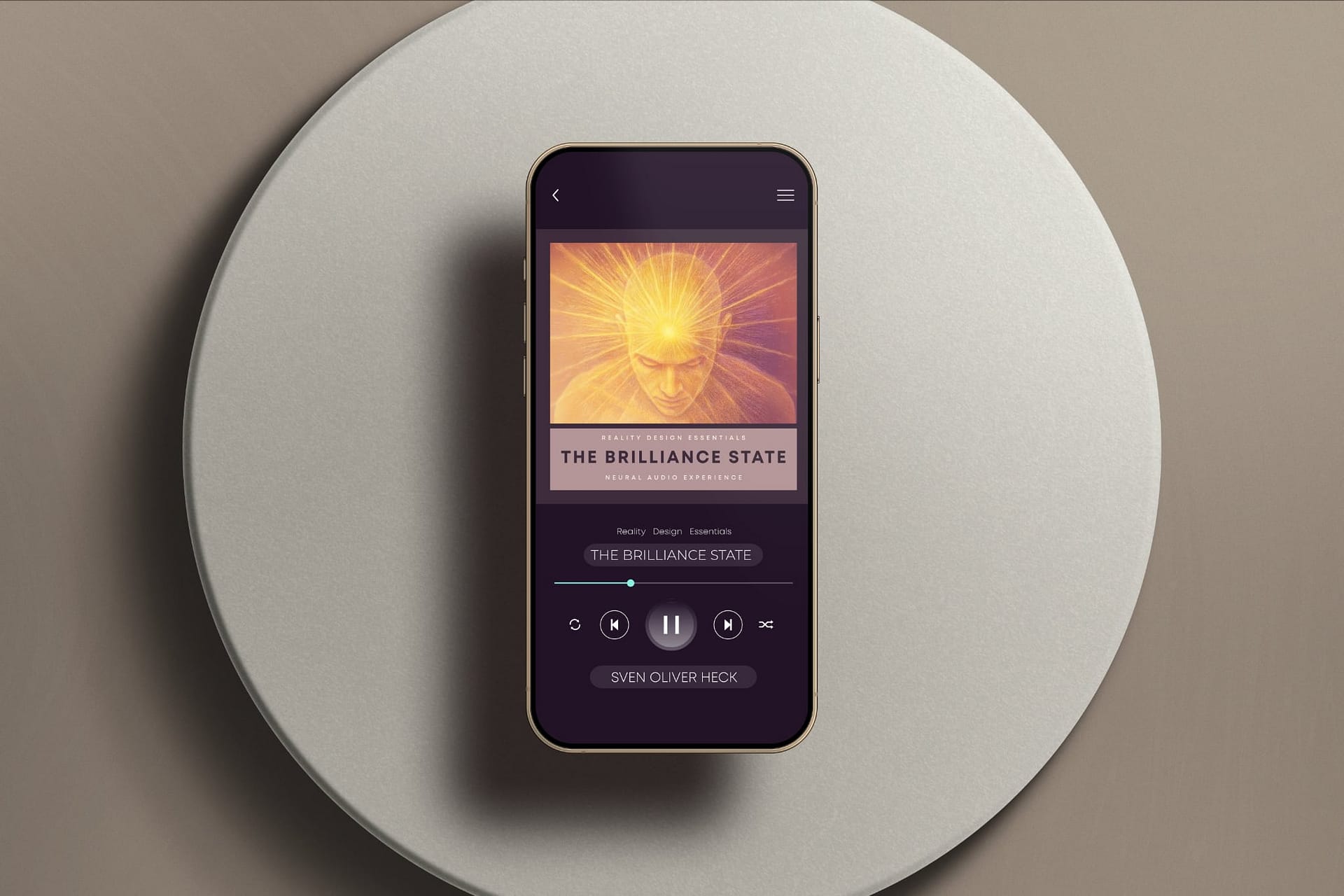
I created a short guided practice called the Brilliant State Meditation. It takes about 10 minutes, and it helps you return to a more present and aligned state.
From that place, two things become easier. First, you can spot when you’re stuck in a loop. Second, you can sense what kind of identity shift is being asked of you.

If you want support with this, you can access my free breakthrough mind tools and guided meditation resources. They are designed to help you come back to clarity, presence, and a more grounded inner state.
This kind of practice does more than calm you down. It helps you see yourself more truthfully. And that is where lasting change begins.
Some loops are easy to name and soften. Others have been with you for years. They may sit underneath your ambition, your relationships, or your drive to keep achieving while still feeling that something essential is missing.
That is the kind of work I do with clients.
I work with accomplished entrepreneurs and leaders who have insight, discipline, and success, yet still feel caught in patterns that no amount of productivity has resolved. Together, we work with Reality Design, which complements traditional cognitive behavioral therapy through identity shifts that bring more clarity, more wholeness, and more inner authority.
If that speaks to where you are, you can schedule a private conversation about working with me.
If the loop you’re facing is strongly emotional, such as those rooted in anxiety and depression, I also recommend my video on emotions that lie to you. It can help you see which feelings carry truth and which ones are pulling you back into an old pattern.
Overthinking persists because it’s often tied to an underlying identity that recreates the loop, not just surface-level habits. Effort alone from within that identity keeps pulling you back, even after temporary progress. True freedom comes from recognizing the pattern with self-compassion and shifting to a more aware version of yourself.
Self-awareness allows you to notice thoughts, emotions, and reactions in real time, creating separation from the automatic loop. This clear seeing interrupts the cycle before it fully grips you, giving you choice instead of repetition. Over time, it builds the discernment to live from truth rather than familiar distortions.
A mindset shift can interrupt thoughts temporarily through reframing, but it often doesn’t reach the deeper structure fueling the loop. An identity shift changes who you are at your core, outgrowing the pattern entirely so overthinking loses its hold. This deeper change makes presence and clarity more natural.
Yes, high performers often face stubborn loops because they rely on effort and optimization to solve inner issues that require awareness instead. Their success masks the repetition of self-doubt or control patterns rooted in an outdated identity. Recognizing this mismatch is the first step to inner alignment beyond outer results.
Reality Design is a conscious process of redesigning the self you live from, aligning inner identity with your truer nature. It uses self-awareness to spot loops, release old conditioning, and create conditions for lasting presence. This approach transforms overthinking into clarity by fostering inside success.
When you feel stuck in a loop, it is easy to assume something is wrong with you. Most of the time, the deeper truth is simpler. An old identity is repeating itself, and your awareness is asking you to grow beyond it.
You stop overthinking when you stop living as the version of you that needs the loop. Self-awareness opens that door through an identity shift that fosters more stable mental health and the ability to live in the present moment. Then your choices, your presence, and your life begin to change from the inside out. This is how to stop overthinking.